Natural Resources
-

Paul Collier will talk about how to manage the difference between helpful and damaging commercialisation, and puts forth three arguments. First, we need to face the tough reality that African food production has failed to keep pace with demand over the course of several decades, suggesting that there is a deep problem with respect to innovation and investment given the way African agriculture has been organised. Second, we need to accept that climate change, population growth, and income gains from natural resources will all stress this imbalance further: the prospect is for widening food deficits with business as usual. Third, two major changes are afoot. Globally, the model of commercial tropical agriculture pioneered in Brazil has demonstrated that output can be raised very substantially by changing the mode of organisation. Africa is now starting to open land markets to large foreign management. Superficially this looks like Brazil2, but it may instead be a wave of speculative acquisitions triggered by the price peaks of 2008.

Collier is the Director of the Centre for the Study of African Economies and Professor of Economics and Public Policy at the Blavatnik School of Government, Oxford University. He is currently Advisor to the Strategy and Policy Department of the IMF, advisor to the Africa Region of the World Bank; and he has advised the British Government on its recent White Paper on economic development policy. He has been writing a monthly column for the Independent, and also writes for the New York Times, the Financial Times, the Wall Street Journal, and the Washington Post. His research covers the causes and consequences of civil war; the effects of aid and the problems of democracy in low-income and natural-resources rich societies.

Derek Byerlee's talk will lay out a number of models of inclusive agribusiness growth, grouped into three categories (i) institutional arrangements for improving productivity of smallholders operating in spot markets, (ii) various types of contract farming arrangements, and (iii) large-scale farms that generate jobs and/or include community equity shares. The institutional and policy context as well as commodity characteristics that favor these models are discussed within a simple transactions cost framework. He will also discuss cross-cutting policy priorities to enable the growth of commercial agriculture and agribusiness. These include continuing reforms to liberalize product and input markets, access to technology and skills, stimulating financial and risks markets, securing land rights, and investment in infrastructure through public-private partnerships. 

Byerlee has dedicated his career to agriculture in developing countries, as a teacher, researcher, administrator and policy advisor. He has lived and worked for a total of 20 years in the three major developing regions-Africa, Asia, and Latin America. After beginning in academia at Michigan State University, he spent the bulk of his career at the International Maize and Wheat Improvement Center (CIMMYT). There as a economist and research manager he made notable contributions in forging a new spirit of collaboration between scientists, economists and farmers. He also published widely on efficiency of research systems, spillovers, and sustaining productivity in post green revolution agriculture. After joining the World Bank in 1994, he has applied his experience of research systems to finding innovative approaches to funding and organizing agricultural research, including emerging challenges in biotechnology policy. Since 2003, he has provided strategic direction and led policy world for the agricultural and rural sector in the World Bank.


Bechtel Conference Center

Paul Collier Director, Centre for the Study of African Economies, Oxford University Speaker
Derek Byerlee Independent Scholar, Director, 2008 World Development Report Speaker
Symposiums
Paragraphs

Soybean production has become a significant force for economic development in Brazil. It has also received considerable attention from environmental and social non-governmental organizations as a driver of deforestation and land consolidation. While many researchers have examined the impacts of soybean production on human and environmental landscapes, there has been little investigation into the economic and institutional context of Brazilian soybean production or the relationship between soy yields and planted area. This study examines the influence of land tenure, land use policy, cooperatives, and credit access on soy production in Brazil. Using county level data we provide statistical evidence that soy planted area and yields are higher in regions where cooperative membership and credit levels are high, and cheap credit sources are more accessible. This result suggests that soybean production and profitability will increase as supply chain infrastructure improves in the Cerrado and Amazon biomes in Brazil. The yields of competing land uses, wheat, coffee, and cattle production and a complementary use, corn production, also help to determine the location of soybean planted area in Brazil. We do not find a significant relationship between land tenure and planted area or land tenure and yields. Soy yields decline as transportation costs increase, but planted area as a proportion of arable land is highest in some of the areas with very high transportation costs. In particular, counties located within Mato Grosso and counties within the Amazon biome have a larger proportion of their arable, legally available land planted in soy than counties outside of the biome. Finally, we provide evidence that soy yields are positively associated with planted area, implying that policies intending to spare land through yield improvements could actually lead to land expansion in the absence of strong land use regulations. While this study focuses on Brazil, the results underscore the importance of understanding how supply chains influence land use associated with cash crops in other countries.

All Publications button
1
Publication Type
Journal Articles
Publication Date
Journal Publisher
Land Use Policy
Authors
Rachael Garrett
Eric Lambin
Rosamond L. Naylor

The Yaqui Valley is the birthplace of the Green Revolution and one of the most intensive agricultural regions of the world, using irrigation, fertilizers, and other technologies to produce some of the highest yields of wheat anywhere. It also faces resource limitations, threats to human health, and rapidly changing economic conditions. In short, the Yaqui Valley represents the challenge of modern agriculture: how to maintain livelihoods and increase food production while protecting the environment.

-

Effective water management is one key element of agricultural innovation and growth. This talk: outlines evolving and changing good global practices with respect to water management and agriculture; examines developments in both water and agriculture in Africa; and suggests avenues which might be explored in improving water management and increasing agricultural productivity in Africa.


Image

 is the Gordon McKay Professor of the Practice of Environmental Engineering and Environmental Health at Harvard University where he directs the Harvard Water Security Initiative. He teaches undergraduate and graduate courses on water management and development. In 2010 he was nominated for the Joseph R. Levenson Prize for exceptional teaching of Harvard undergraduates.

Briscoe's career has focused on the issues of water, other natural resources and economic development. He has worked as an engineer in the government water agencies of South Africa and Mozambique; as an epidemiologist at the Cholera Research Center in Bangladesh; and as a professor of water resources at the University of North Carolina. In his 20-year career at the World Bank, he held high-level technical positions, including Country Director for Brazil (the World Bank’s biggest borrower). Mr. Briscoe's role in shaping the governance and strategy of the World Bank is the subject of a chapter in the definitive recent history of the Bank, Sebastian Mallaby's The World's Banker (Penguin, 2006).

Image

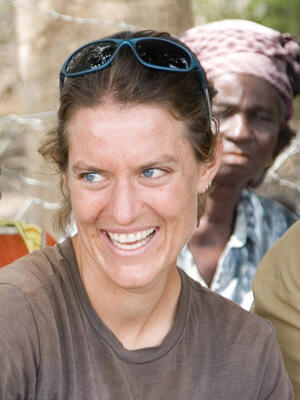
 is an Assistant Professor of Science, Technology, Engineering, and Policy in the School of International Relations and Pacific Studies at the University of California, San Diego. She is also an affiliate of Stanford University's Center on Food Security and the Environment (FSE), where she was previously a postdoctoral researcher. Jennifer is a physicist by training whose research focuses on simultaneously achieving global food security and mitigating climate change. She designs, implements, and evaluates technologies for poverty alleviation and agricultural adaptation, and she studies the links between energy poverty and food and nutrition security, the mechanisms by which energy services can help alleviate poverty, and the environmental impacts of food production and consumption. Much of Jennifer's current research focuses on the developing world.

Bechtel Conference Center

John Briscoe Gordon McKay Professor of the Practice of Environmental Engineering Speaker Harvard University
0
Professor, Earth System Science
Professor, Environmental Social Sciences
Senior Fellow, Freeman Spogli Institute for International Studies
burney_jennifer.jpeg Phd

Jennifer Burney is deputy director of the Center on Food Security & the Environment at Stanford University and member of the National Geographic Explorers family. Burney is a physicist by training whose research focuses on simultaneously achieving global food security and mitigating climate change. Her research interests center on the creation, implementation, and rigorous evaluation of technologies that impact human health and welfare. Jen earned her PhD in physics from Stanford. 

Date Label
Jennifer Burney Assistant Professor of Science, Technology, Engineering, and Policy in the School of International Relations and Pacific Studies Commentator University of California, San Diego
Symposiums
Paragraphs

Seeds of Sustainability is a groundbreaking analysis of agricultural development and transitions toward more sustainable management in one region. An invaluable resource for researchers, policymakers, and students alike, it examines new approaches to make agricultural landscapes healthier for both the environment and people.

The Yaqui Valley is the birthplace of the Green Revolution and one of the most intensive agricultural regions of the world, using irrigation, fertilizers, and other technologies to produce some of the highest yields of wheat anywhere. It also faces resource limitations, threats to human health, and rapidly changing economic conditions. In short, the Yaqui Valley represents the challenge of modern agriculture: how to maintain livelihoods and increase food production while protecting the environment.

Renowned scientist Pamela Matson and colleagues from leading institutions in the U.S. and Mexico spent fifteen years in the Yaqui Valley in Sonora, Mexico addressing this challenge. Seeds of Sustainability represents the culmination of their research, providing unparalleled information about the causes and consequences of current agricultural methods. Even more importantly, it shows how knowledge can translate into better practices, not just in the Yaqui Valley, but throughout the world.

All Publications button
1
Publication Type
Books
Publication Date
Journal Publisher
Island Press
Authors
Pamela Matson
Walter P. Falcon
Rosamond L. Naylor
David Lobell
David S. Battisti
Number
9781610911771

Indonesia is currently the world’s top palm oil producer. Since the 1980s total land area planted to palm oil has increased by over 2,100 percent growing to 4.6 million hectares – the equivalent of six Yosemite National Parks. Plantation growth has predominately occurred on deforested native rainforest with major implications for global carbon emissions and biodiversity.

Paragraphs

This paper was prepared for Stanford University’s Global Food Policy and Food Security Symposium Series, hosted by the Center on Food Security and the Environment, and supported by the Bill and Melinda Gates Foundation.


Sub-Saharan Africa (SSA) is home to two-thirds of the world’s ultra-poor today. This paper offers current thinking on the structural causes of the spatially concentrated, persistent ultra-poverty that has plagued Africa for a generation and some key entry points for facilitating Africans’ escape from persistent ultra-poverty.

The increased recognition of persistent ultra-poverty has rekindled long-dormant interest in poverty traps. The essence of a poverty trap is that there exists one or more low equilibrium level(s) of well-being in which people appear caught unnecessarily. Small adjustments fail to move people out of those equilibria sustainably. Rather, systems must change, major positive shocks must occur, or both. And in the absence of systemic change, recurring adverse shocks only drive more people into the trap.

The ultra-poverty trap that characterizes much of rural SSA today is intimately caught up with (i) the bidirectional interrelationship among hunger, ill-health, low productivity, weak institutions and natural resources degradation, all of which become manifest in low incomes, (ii) poor initial conditions associated with health and nutrition, especially early in childhood, but also with the state of infrastructure and the natural resource base on which rural livelihood disproportionately depend, and (iii) uninsured risk exposure, which is especially severe in rural areas and in agriculture. The closely coupled nature of these problems adds substantially to the challenge of addressing any one of them on its own and thereby makes integrated strategies essential. 

The available theory and evidence suggests that the policy focus must fall squarely on stimulating a smallholder food productivity revolution. Toward that end, the paper concludes by identifying and explaining key entry points for assisting the escape from persistent ultra-poverty in sub-Saharan Africa.

  1. Build and protect the productive asset endowments of the ultra-poor
  2. Improve the productivity of the ultra-poor’s current asset holdings
  3. Improve risk management options for the ultra-poor
  4. Facilitate favorable transitions out of agriculture

Although the topic of persistent ultra-poverty would seem to lend itself to a pessimistic ending, the future for Africa is actually rather hopeful. The East Asian experience demonstrates that mass, rapid escape from persistent ultra-poverty is feasible. Real agricultural output growth rates are accelerating in SSA, nearly doubling from the 1980s rate so that per capita food output is growing again, helping reduce rural poverty rates in countries enjoying increased agricultural productivity. Finally, the  policymaking and donor communities are now appropriately focusing on how best to stimulate investment incentives, productivity growth, risk management and productive transitions out of agriculture. These broad foci are appropriate and reasonably well-grounded in both theory and empirical evidence.  

All Publications button
1
Publication Type
Books
Publication Date
Journal Publisher
Center on Food Security and the Environment
Authors
Paragraphs

The challenges of reducing global hunger and poverty are different today than they were 30 years ago. Current challenges include price volatility associated with increased integration of food, energy, and finance markets; the steady progression of climate change; poorly defined land institutions; and a failure to break vicious cycles of malnutrition and infectious disease. Farmland speculation is occurring globally—often at odds with rural poverty alleviation—and food insecurity remains a pressing issue with the estimated number of chronically malnourished people hovering around one billion. Given these patterns, food and agriculture are becoming increasingly ingrained in international security and policy discussions. This paper explores several ways in which the traditional field of agricultural development needs to expand to address the broader issues of international security and human welfare. It focuses on five key interrelated issues: the macroeconomic and energy contexts of agricultural development; climate change; deforestation, land access, and land markets; farming systems and technology for the ultra-poor; and food-health linkages with a specific focus on infectious disease. Recommendations for investments in capacity building, revised curricula, and development projects are made on the basis of evidence presented for each issue. It is clear that academic programs, government agencies, development and aid organizations, and foundations need to dismantle the walls between disciplinary and programmatic fields, and to find new, innovative ways to reach real-world solutions.

All Publications button
1
Publication Type
Journal Articles
Publication Date
Journal Publisher
Food Security
Authors
Rosamond L. Naylor
Paragraphs

The increasing global demand for biofuels will require conversion of conventional agricultural or natural ecosystems. Expanding biofuel production into areas now used for agriculture reduces the need to clear natural ecosystems, leading to indirect climate benefits through reduced greenhouse-gas emissions and faster payback of carbon debts. Biofuel expansion may also cause direct, local climate changes by altering surface albedo and evapotranspiration, but these effects have been poorly documented. Here we quantify the direct climate effects of sugar-cane expansion in the Brazilian Cerrado, on the basis of maps of recent sugar-cane expansion and natural-vegetation clearance combined with remotely sensed temperature, albedo and evapotranspiration over a 1.9 million km2 area. On a regional basis for clear-sky daytime conditions, conversion of natural vegetation to a crop/pasture mosaic warms the cerrado by an average of 1.55 (1.45-1.65) °C, but subsequent conversion of that mosaic to sugar cane cools the region by an average of 0.93 (0.78-1.07) °C, resulting in a mean net increase of 0.6 °C. Our results indicate that expanding sugar cane into existing crop and pasture land has a direct local cooling effect that reinforces the indirect climate benefits of this land-use option.

Figures/tables index

All Publications button
1
Publication Type
Journal Articles
Publication Date
Journal Publisher
Nature Climate Change
Authors
David Lobell
Gregory P. Asner
Christopher B. Field
Subscribe to Natural Resources