Agriculture
Authors
Jennifer Burney
News Type
Q&As
Date
Paragraphs

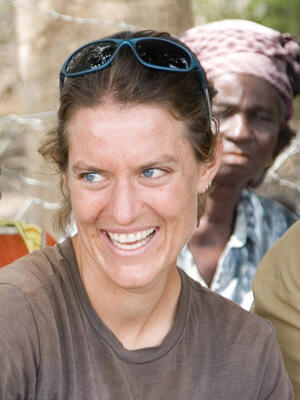
Jennifer Burney, named a National Geographic Emerging Explorer in 2011, continues her work on agricultural solutions for struggling farmers. She observes, for example, that “as great as local organic food may be in my own kitchen, we’ll never feed the whole world that way. Like it or not, ‘Big Agriculture’ is why we’ve been able to sustain a hungry planet; and thanks to investments in technology, significant climate impact has been mitigated.” One key contribution she made was introducing solar irrigation to farmers in Benin, Africa.

Click here to read full interview.

Hero Image
beninsolarpanel self Marshall Burke
All News button
1
Authors
David Lobell
News Type
News
Date
Paragraphs

Originally appeared in The Chicago Council's Global Agricultural Development Initiative Global Food For Thought blog.


Image
For all of the talk about the need to adapt to climate change, we still know fairly little about two basic questions: what works best, and how much can adaptation deliver? It‘s time to learn quickly.

Why don’t we know more? It would be easy to blame our ignorance on complacency. There is a tendency to marvel at the progress made in agriculture in the past 50 years, and assume it can handle anything. For example, the USDA declared in the early 1970s that new technologies meant “man has reduced variation in yields in both good and bad weather.” This optimism quietly faded after a series of bad harvests in the late 1970’s and 1980’s, including the big drought of 1988. People realized that a period of unusually benign weather, and not the technological gains themselves, had limited volatility during the middle of the 20th century.

It is also tempting to blame ignorance on inexperience. After all, many people continue to view climate change as something to deal with in the future. But the evidence is clear that climate has already been changing over the past 30 years in most agricultural areas, and farmers are doubtlessly trying to adapt. Up until now, the United States was an exception to that trend. But the 2012 drought has changed that, and projections indicate that years like this will be increasingly common in the coming decades.

With widespread evidence for climate change and its impacts, complacency and inexperience should give way to rigorous evaluations of what has happened. For example, why was US agriculture not better prepared for the 2012 drought? And did anything work well that can be scaled up?

A lot has changed in US agriculture since the 1988 drought, and many of the changes were textbook examples of what should help to reduce impacts of hot summers. Farmers now sow corn and soybeans more than a week earlier on average, and use longer maturing varieties than in 1988. Advances in cold tolerance along with spring warming trends allowed corn to expand in northern states where temperatures are cooler. For example, North and South Dakota increased corn area by more than 35% (nearly 2.5 million acres) just since 2009. Carbon dioxide levels, which improve crop water use efficiency, have increased by more than 10% since 1988. And farmers have begun to grow drought tolerant seeds that were unavailable in 1988.

Yet when the 2012 drought arrived, with fairly similar characteristics to 1988, impacts on crop yields were roughly the same. Corn yields are expected to be about 25% below trend, close to the 28% drop in 1988.

What can we learn from this experience? It is too early to say anything definitive, but two explanations seem plausible. First, it may be that some of the above changes were truly beneficial, but were counteracted by other changes making agriculture more, not less, sensitive to weather. For example, breeding progress in corn has generally been faster for good conditions than bad. As farmers become even better at eliminating yield losses from pests, nutrient stress, and other factors, the benefits of having favorable rainfall and temperature become that much greater, and the relative damages of not having them become that much worse.

A second possibility, of course, is that the adaptive changes in agriculture simply did not help much in dealing with adverse weather. For example, migrating corn northward may help, but the vast majority of corn production remains where it has been for decades, so the quantitative effect is small.

Hopefully researchers will quickly distinguish between these and other explanations, and the lessons can help guide efforts to further adapt. But any explanation will likely imply that there are limits to how much adaptation can reduce impacts of climate change. This fact does not diminish the urgency and importance of efforts to adapt to climate variability and change throughout the world. But it is a reminder that greenhouse gas mitigation is pivotal in any strategy to reduce impacts of climate change. Adaptation can only do so much.

Hero Image
Lobell Anne Schnoebelen 9 12 cropped Anne Schnoebelen
All News button
1
News Type
News
Date
Paragraphs

Sharon Gourdji, postdoctoral scholar at Stanford's Center on Food Security and the Environment, has been awarded a Fulbright Scholar grant to assess climate change adaptation strategies for maize-bean smallholder farmers in Central America during the 2012-2013 academic year. This will be a collaboration with the International Center for Tropical Agriculture (CIAT) in Cali, Colombia and with a global cross-CGIAR initiative called Climate Change and Food Security.

Proposal abstract:

Maize and bean production provides a livelihood for millions of subsistence-level farmers in Central America. However by 2050, projected climate change threatens the viability of maize-bean production in the region, with some areas becoming completely unsuitable, and others suitable only with sufficient agronomic adaptations. In this proposal, we first assess the impact that climate trends have had on yields and farmer livelihoods in the last 30 years. Next, we look at two adaptation strategies to help farmers cope with future changes: the development and spread of more heat and drought-tolerant varieties, especially for bean, and the uptake of small-scale irrigation to cope with unreliable rainfall and expand production into the dry season.

About the Fullbright NEXUS program:

The Fulbright NEXUS program this year is focused on sustainable development in the Western Hemisphere (http://www.cies.org/NEXUS/). Gourdji is one of approximately 1,100 U.S. faculty and professionals who will travel abroad through the Fulbright U.S. Scholar Program in 2012-2013.

The Fulbright Program is the flagship international educational exchange program sponsored by the U.S. government and is designed to increase mutual understanding between the people of the United States and the people of other countries. The primary source of funding for the Fulbright Program is an annual appropriation made by the U.S. Congress to the U.S. Department of State, Bureau of Educational and Cultural Affairs. Participating governments and host institutions, corporations and foundations in foreign countries and in the United States also provide direct and indirect support. Recipients of Fulbright grants are selected on the basis of academic or professional achievement, as well as demonstrated leadership potential in their fields. The Program operates in over 155 countries worldwide.

All News button
1

Y2E2 building
E-IPER, room 226
473 Via Ortega
Stanford, CA 94305-4020

0
PhD student, Emmett Interdisciplinary Program in Environment and Resources
Fran_Moore_Photo_hs.jpg MS

Frances C. Moore is a PhD student in the Emmett Interdisciplinary Program in Environment and Resources at Stanford University. She is working with David Lobell and Larry Goulder to study how farmers are likely to adapt to climate change so as to reduce its negative effects. Understanding the likely rate and effectiveness of this autonomous adaptation is important for accurately estimating the future impact of climate change on agricultural production and food security. Fran is combining experimental, statistical, and field-based methods from economics, anthropology and psychology with climate data and models in order to better model adaptation in agriculture.

Fran’s previous work focused on the negotiation of international climate agreements and she has published several articles on the mitigation potential of short-lived greenhouse gases in developing countries and on the negotiation of international adaptation policy. Fran is a Stanford Interdisciplinary Graduate Fellow, a former Switzer Foundation Fellow and a former NSF Graduate Research Fellow. She holds a Masters of Environmental Science from the Yale School of Forestry and Environmental Studies and a B.A., summa cum laude, in Earth and Planetary Science from Harvard University.

Lobell laboratory

0
kmoiyoi.png

Katrina grew up in Nairobi, Kenya, and spent much of her youth camping on the East African savannah and exploring coral reefs in the Indian Ocean. She moved to the US at the age of eighteen, and holds a B.A. from Brown University in International Relations, an M.A. from the University of Washington in Marine Affairs, and a PhD in Environment and Resources from the Stanford Emmett Interdisciplinary Graduate Program in Environment and Resources.

Her professional experience includes several years in international development consulting in Washington DC, where she provided programmatic and technical support to USAID-funded fisheries and water management programs in South Asia and Sub-Saharan Africa. Working with the UN Food & Agriculture Organization's Bay of Bengal Large Marine Ecosystem Program, she reviewed the status of marine protected areas in eight South Asian countries (Maldives, Sri Lanka, India, Bangladesh, Myanmar, Thailand, Malaysia and Indonesia) and presented recommendations to senior government officials from each country on ways to improve marine resource management across borders. In the field of agriculture, she worked with a private drip irrigation and greenhouse company in Israel, and also co-founded and ran a farm with 200+ customers on the outskirts of Tel Aviv. Most recently, she traveled to Thailand, Indonesia and the Philippines to provide technical advice on the design of a marine fisheries traceability program meant to improve food security and the health of marine ecosystems. She is currently the Director of Sustainability for Victory Farms.

The Yaqui Valley is the birthplace of the Green Revolution and one of the most intensive agricultural regions of the world, using irrigation, fertilizers, and other technologies to produce some of the highest yields of wheat anywhere. It also faces resource limitations, threats to human health, and rapidly changing economic conditions. In short, the Yaqui Valley represents the challenge of modern agriculture: how to maintain livelihoods and increase food production while protecting the environment.

Authors
Walter P. Falcon
News Type
News
Date
Paragraphs

My wife and I are spending the summer of 2012 at our farm near Cedar Rapids, Iowa. It is a relatively small corn, soybean, and cow/calf operation in the east central part of the state. We are surrounded by other farmers, many of whom are getting on in years, who typically farm between 500 and 1,000 acres. A few also feed cattle and there is one confined pork operation nearby.

For someone interested in agricultural price volatility, this summer has been a three-month seminar in real time. There was an early spring in Iowa, and record acres of corn and beans were planted. Some of our neighbors even brought conservation-reserve land back into production. Plantings were fencerow to fencerow—although fewer fences line the landscape as farmers move out of the livestock business and fences are removed to accommodate the larger 12- and 16-row equipment that is now commonplace. Early commodity prices were good, but not spectacular in April and May, and with prospects for a large crop, many of our neighbors made forward contracts to deliver large quantities of corn and beans to local ethanol and bean-crushing plants. 

Temperature and rainfall at the time of pollination and grain filling dramatically affect corn yields—and this year the combined effect was dreadful. The corn crop literally curled up and died before our eyes. The corn on sandy hills burned up first, but the crop on deeper, blacker soils soon followed. National corn prices followed the thermostat. Cash prices of corn went from about $6 per bushel in May to more than $8 in early August. And then came June and July. National reserve stocks of corn were very low, so price stability was dependent on average or better weather. Instead, extreme weather came in all forms. Average temperatures at the Cedar Rapids weather station for June, July and the first week of August were the highest in recorded history. Maximum temperatures for 22 of the past 70 days exceeded 90 degrees. Total rainfall was only 1.1 inch, compared to an historical average of 8.1 inches. It is the driest summer since 1910.

With the corn crop currently denting, and thus “fixed” (more rain would not now improve yields), all attention turned to soybeans. Beans have a resilient character to them, with the capacity to shed blossoms until growing conditions “are right.” Having lost much of the corn crop, our neighbors are busy reassuring each other that “the bean crop is made in August”—but only if rains arrive. Unfortunately, there is little moisture predicted in the medium-term forecasts.

Worst hit of all have been the livestock producers. Pastures are toast, and watering holes and rivers are drying up. The sizeable creek that runs through our farm is now the tiniest of trickles. The likelihood of having to move the cows and calves is growing daily, and the question of whether our farm well will have enough capacity to supply both the animals and us is now a critical issue. The problems of cattle feeders are even more dire. Prices for fed cattle are down, and the extreme heat is taking its toll—quite literally. Fat cattle weighing 1,400 to 1,500 pounds do not gain weight well, nor do they even breathe well. Farmers who own the two operations nearest us report that they dare not sort and ship steers to market because of the heat. They each report having lost two animals from heat-related respiration problems, each animal valued at about $1,600. Moreover, even without heat losses, they are faced with extremely high feed costs. And high prices do not end with corn and soybean meal. 

Forage and hay prices have been even more affected by climate variability. The large round bales that weigh upwards of a ton and typically sell for $60 are now selling for $250! The price is partly driven up by truckers from Missouri and Arkansas, locations hit earlier and even more severely, coming to eastern Iowa to purchase forage. So tight is the forage market that farmers are baling grass from the Conservation Reserve (recently permitted by the government), waterways, and even ditches. Plants with any sort of green tint to them are being mowed and baled.

The talk among farmers is, as always, most interesting. About four miles from home is the small town of Waubeek—a tiny burg in a part of Iowa made famous by Grant Wood, best known for painting "American Gothic" and other scenes of the rural Midwest. Each morning at about 8:30, locals gather in a limestone building called (perhaps miscalled) a restaurant to have watery coffee and rolls, to trade stories, and to establish bragging rights on a variety of issues from yields, to prices, to number and sizes of tractors. Conversation over the years has always centered on the dreadful nature of weather, prices and the government, though this year there are nuances in the stories being told. They range from the very happy, “I sold a load of old-crop corn this morning for $8.14, the highest price in my whole life as a farmer;” to the “I walked my corn fields this morning. Where I got 220 bushels last year, I don’t think the crop will make 80 bushels this year.” No one at the table thought their corn crops would yield more than 120 bushels; and everyone noted that virtually all of those yields would be discounted in price because of low test weights.

Talk then turned to new seed varieties, mostly from Pioneer and Monsanto, which have transgenic drought resistance built into them. Bags (80,000 kernels) of seed—enough to plant about 2.5 aces—range in price from $300 to $400. There is hope, but not much confidence, that the new seeds will help compensate for the low rainfall. The farmers report that the companies, which are far from loved because their seed prices are perceived as being too high, are backing away from yield claims. The conversation also took up the pros and cons of “green” chopping the stalks and immature corn to make silage. It turns out that this strategy is fraught with nitrate problems arising mainly from this year’s weather. The laughing summary comment was “anyway, we have way too much standing corn and way too few cattle to make that solution work.” Laughter continued as they talked about those 10,000 “crazy folks” who were riding bicycles across Iowa in the heat as part of the annual ride across Iowa.

Most surprising to me is the fact that the conversations are not gloomier. What I had not realized was the increased role that crop insurance was playing in most farmers' operations. Upon checking, I found that about 90 percent of the land is covered by a joint public/private insurance program, in which private companies offer insurance, with the government and farmers sharing in the premia. Many of these policies provide for both price and yield protection and cover losses in excess of 25 percent. For most crop farmers, therefore, the year 2012 will not be good, but it will be far from a disaster. 

But there were also some truly downcast faces at morning coffee. Livestock producers curse the cost of corn and the fact that they are getting little program assistance from the government. They choose their words carefully, but the livestock producers would also be delighted if somehow the ethanol industry went away. Similarly, crop farmers who have no crop insurance, and /or who contracted forward to sell what they expected would be a large harvest at modest prices, now are facing the costly prospect of having to buy high priced corn on the market to fulfill their delivery contracts.

After more assurances to each other that “the bean crop is made in August,” conversations turned to the future. Will marketing be totally messed up because of low flows in the Mississippi River and disrupted barge traffic? What, they ask, will the heat and drought do to land prices? The local area has seen a rapid run-up in land prices, a 32 percent increase between 2011 and 2012, with land sales for the county now averaging $8,000 per acre for medium quality land. And what will happen to cash rents for farmland now averaging $270 per acre? Most of all they ask, what will happen to weather in 2013?  Most of them can see their way through one year of really difficult weather; their primary concern is what happens if there are two 2012s in a row. Opinion divides on whether next year will return to normal, or whether 2012 is a good predictor of many years to come.

One thing of course never changes: their views of the government that range from dismay to disgust. The fact that the current Congress seems unable to pass either a new farm bill or a special bill covering drought, especially for livestock producers, is the subject for special derision. 

Meanwhile, everyone watches the markets, waits, and prays for rain.

All News button
1

Energy and Environment Building
MC 4205
473 Via Ortega, room 365
Stanford CA 94305

(650) 721-2203
0
Postdoctoral scholar
Glwadys_profile_pic.jpg MS, PhD

Glwadys Aymone Gbetibouo is a citizen from Côte d’Ivoire (Ivory Coast) where she received an Ingénieur Agronome degree in 2000 at the Institut National Polytechnique Houphouët Boigny. She then joined the University of Pretoria to pursue post-graduate studies in agricultural and environmental economics and policy analysis. She obtained both a MSc degree in Agricultural Economics in 2004 and a PhD in Environmental Economics in 2011 from the University of Pretoria. Her research interests include global warming and agriculture. Her area of expertise is on measuring the impacts of climate change on agriculture and the adaptation behavior and vulnerability of rural communities to climate change and variability.

Prior to joining FSE, Glwadys has been working as an international climate change consultant at C4EcoSolutions, a private consulting firm based in South Africa. During her time at C4 EcoSolutions, she has been involved in developing climate change adaptation project documents for the United Nations Agencies for funding under the Global Environmental Fund (GEF) Least Developing Countries Fund (LDCF) and Special Climate Change Fund (SCCF). Also she has provided technical guidance and advisory services for the implementation of climate change projects in countries such as Djibouti, Lesotho. Mozambique, Niger and Zambia.

Glwadys’s current research is on small scale irrigation technologies and adaptation to climate change.

Paragraphs

Reprinted with full permission from the Proceedings of the National Academy of Sciences.

A detailed retrospective of the Green Revolution, its achievement and limits in terms of agricultural productivity improvement, and its broader impact at social, environmental, and economic levels is provided. Lessons learned and the strategic insights are reviewed as the world is preparing a reduxversion of the Green Revolution with more integrative environmental and social impact combined with agricultural and economic development. Core policy directions for Green Revolution 2.0 that enhance the spread and sustainable adoption of productivity enhancing technologies are specified.

All Publications button
1
Publication Type
Journal Articles
Publication Date
Journal Publisher
Proceedings of the National Academy of Sciences
Authors
-

Effective water management is one key element of agricultural innovation and growth. This talk: outlines evolving and changing good global practices with respect to water management and agriculture; examines developments in both water and agriculture in Africa; and suggests avenues which might be explored in improving water management and increasing agricultural productivity in Africa.


Image

 is the Gordon McKay Professor of the Practice of Environmental Engineering and Environmental Health at Harvard University where he directs the Harvard Water Security Initiative. He teaches undergraduate and graduate courses on water management and development. In 2010 he was nominated for the Joseph R. Levenson Prize for exceptional teaching of Harvard undergraduates.

Briscoe's career has focused on the issues of water, other natural resources and economic development. He has worked as an engineer in the government water agencies of South Africa and Mozambique; as an epidemiologist at the Cholera Research Center in Bangladesh; and as a professor of water resources at the University of North Carolina. In his 20-year career at the World Bank, he held high-level technical positions, including Country Director for Brazil (the World Bank’s biggest borrower). Mr. Briscoe's role in shaping the governance and strategy of the World Bank is the subject of a chapter in the definitive recent history of the Bank, Sebastian Mallaby's The World's Banker (Penguin, 2006).

Image

 is an Assistant Professor of Science, Technology, Engineering, and Policy in the School of International Relations and Pacific Studies at the University of California, San Diego. She is also an affiliate of Stanford University's Center on Food Security and the Environment (FSE), where she was previously a postdoctoral researcher. Jennifer is a physicist by training whose research focuses on simultaneously achieving global food security and mitigating climate change. She designs, implements, and evaluates technologies for poverty alleviation and agricultural adaptation, and she studies the links between energy poverty and food and nutrition security, the mechanisms by which energy services can help alleviate poverty, and the environmental impacts of food production and consumption. Much of Jennifer's current research focuses on the developing world.

Bechtel Conference Center

John Briscoe Gordon McKay Professor of the Practice of Environmental Engineering Speaker Harvard University
0
Professor, Earth System Science
Professor, Environmental Social Sciences
Senior Fellow, Freeman Spogli Institute for International Studies
burney_jennifer.jpeg Phd

Jennifer Burney is deputy director of the Center on Food Security & the Environment at Stanford University and member of the National Geographic Explorers family. Burney is a physicist by training whose research focuses on simultaneously achieving global food security and mitigating climate change. Her research interests center on the creation, implementation, and rigorous evaluation of technologies that impact human health and welfare. Jen earned her PhD in physics from Stanford. 

Date Label
Jennifer Burney Assistant Professor of Science, Technology, Engineering, and Policy in the School of International Relations and Pacific Studies Commentator University of California, San Diego
Symposiums
Subscribe to Agriculture