Policy Analysis
Paragraphs

This paper was prepared for Stanford University’s Global Food Policy and Food Security Symposium Series, hosted by the Center on Food Security and the Environment, and supported by the Bill and Melinda Gates Foundation.


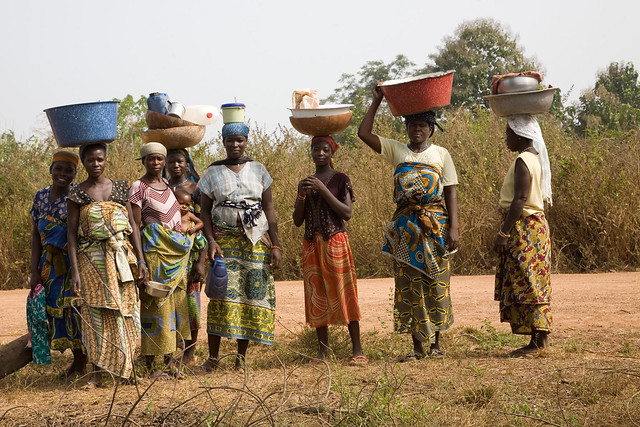
Sub-Saharan Africa (SSA) is home to two-thirds of the world’s ultra-poor today. This paper offers current thinking on the structural causes of the spatially concentrated, persistent ultra-poverty that has plagued Africa for a generation and some key entry points for facilitating Africans’ escape from persistent ultra-poverty.

The increased recognition of persistent ultra-poverty has rekindled long-dormant interest in poverty traps. The essence of a poverty trap is that there exists one or more low equilibrium level(s) of well-being in which people appear caught unnecessarily. Small adjustments fail to move people out of those equilibria sustainably. Rather, systems must change, major positive shocks must occur, or both. And in the absence of systemic change, recurring adverse shocks only drive more people into the trap.

The ultra-poverty trap that characterizes much of rural SSA today is intimately caught up with (i) the bidirectional interrelationship among hunger, ill-health, low productivity, weak institutions and natural resources degradation, all of which become manifest in low incomes, (ii) poor initial conditions associated with health and nutrition, especially early in childhood, but also with the state of infrastructure and the natural resource base on which rural livelihood disproportionately depend, and (iii) uninsured risk exposure, which is especially severe in rural areas and in agriculture. The closely coupled nature of these problems adds substantially to the challenge of addressing any one of them on its own and thereby makes integrated strategies essential. 

The available theory and evidence suggests that the policy focus must fall squarely on stimulating a smallholder food productivity revolution. Toward that end, the paper concludes by identifying and explaining key entry points for assisting the escape from persistent ultra-poverty in sub-Saharan Africa.

  1. Build and protect the productive asset endowments of the ultra-poor
  2. Improve the productivity of the ultra-poor’s current asset holdings
  3. Improve risk management options for the ultra-poor
  4. Facilitate favorable transitions out of agriculture

Although the topic of persistent ultra-poverty would seem to lend itself to a pessimistic ending, the future for Africa is actually rather hopeful. The East Asian experience demonstrates that mass, rapid escape from persistent ultra-poverty is feasible. Real agricultural output growth rates are accelerating in SSA, nearly doubling from the 1980s rate so that per capita food output is growing again, helping reduce rural poverty rates in countries enjoying increased agricultural productivity. Finally, the  policymaking and donor communities are now appropriately focusing on how best to stimulate investment incentives, productivity growth, risk management and productive transitions out of agriculture. These broad foci are appropriate and reasonably well-grounded in both theory and empirical evidence.  

All Publications button
1
Publication Type
Books
Publication Date
Journal Publisher
Center on Food Security and the Environment
Authors
Authors
News Type
News
Date
Paragraphs

Agriculture in Africa has grown steadily for the past 15 years. But that economic improvement is just making up for the preceding two decades of stagnation, says Ousmane Badiane, Africa director for the International Food Policy Research Institute (IFPRI).

And future progress toward industrialization depends on continued agricultural growth, he says.

Badiane will deliver a lecture on April 7, titled Why Has Africa Been Slow in Developing its Agriculture?. He will discuss the current state of agriculture in Africa, the technological resources available and policies needed for economic growth, and how agriculture can address the country's challenge of poverty.

The talk will begin at 4 p.m. at the Bechtel Conference Center in Encina Hall. It is free and open to the public.

A citizen of Senegal working in IFPRI's Washington, D.C., office, Badiane coordinates the organization's food policy research and communications throughout Africa.

From 1998 until mid-2008, Badiane worked at the World Bank as a lead specialist for food and agricultural policy for the Africa region.

As a senior research fellow at IFPRI from 1989 until 1997, Badiane led the institute's work on market reforms and development. He taught as an adjunct professor at the John Hopkins School of Advanced International Studies from 1993 until 2003.

Stanford's Program for Food Security and the Environment (FSE) sponsors the two-year Global Food Policy and Food Security Symposium Series, which is funded by a $1 million grant from the Bill and Melinda Gates Foundation.

Jeff Raikes, chief executive officer of the Gates Foundation, and Greg Page, chief executive officer and chairman of Cargill Inc., delivered the first lecture, Improving Food Security in the 21st Century: What are the Roles for Firms and Foundations, in February.

Future seminars will cover policy development to increase wealth, agricultural productivity and resource stewardship.

All lectures will be videotaped and posted on the symposium website, Global Food Policy and Food Security Symposium Series.

All News button
1
-

Food and agricultural policy experts Prabhu Pingali and Philip Pardey will each speak on trends in productivity and investments in technology, survey of constraints to productivity, incentives and investment, and opportunities to raise productivity.

The Green Revolution - past successes, unfinished business, and the way forward

Pingali will review strategic components of the Green Revolution and its achievement and limits in terms of agricultural productivity improvement and broader impact at social, environmental and economic levels, including its impact on food and nutrition security. Lessons learned and the strategic insights these provide will be reviewed as the world is preparing a "redux" version of the Green Revolution with more integrative environmental and social impact combined with agricultural and economic development. Pingali will also point to core research & policy gaps that can enhance further spread and sustainable adoption of productivity enhancing technologies.

Image

Prabhu Pingali is the Deputy Director of Agricultural Development at the Bill and Melinda Gates Foundation. Formerly, he served as Director of the Agricultural and Development Economics Division of the Food and Agriculture Organization (FAO) of the United Nations. Pingali was elected to the U.S. National Academy of Sciences as a Foreign Associate in May 2007, and he was elected Fellow of the American Agricultural Economics Association in 2006. Pingali was the President of the International Association of Agricultural Economists (IAAE) from 2003-06. Pingali has over twenty five years of experience in assessing the extent and impact of technical change in agriculture in developing countries, including Asia, Africa and Latin America.

 African Agricultural R&D and Productiivity Growth in a Global Setting

Given the continuing importance of agriculture in most African economies, an in-depth understanding of the past and likely future productivity performance of African agriculture is key to assessing the overall economic growth and development prospects of the region. African agriculture operates in increasingly interconnected global commodity markets, so the relative productivity performance of African vis-à-vis rest-of-world agriculture is also relevant. This talk will present new evidence on African agricultural productivity performance and place that evidence in relation to the evolving pattern of agricultural productivity growth worldwide. Technological change is a principal driver of productivity growth, and new, updated evidence on the trends in R&D investments that give rise to these technological changes will also be presented and discussed. The productivity effects of R&D play out over comparatively long periods of time demanding a long-run look at these developments.    
 

Image

Philip Pardey is Professor of Science and Technology Policy in the Department of Applied Economics, and Director of the University of Minnesota's International Science and Technology Practice and Policy (InSTePP) center. His research deals with the finance and conduct of R&D globally, methods for assessing the economic impacts of research, and the economic and policy (especially intellectual property) aspects of genetic resources and the biosciences. He is a Fellow of the American Agricultural Economics Association and a Distinguished Fellow of the Australian Agricultural and Resource Economics Society.

Bechtel Conference Center

Prabhu Pingali Deputy director, Agricultural Development Speaker Bill & Melinda Gates Foundation
Philip Pardey Professor of Science and Technology, Applied Economics Speaker University of Minnesota
Symposiums
-

Thom Jayne, Professor of International Development from Michigan State University will answer the following questions: What are the trends in land access? How can smallholder farmers get higher value out of scarce land and how does that relate to food and non-food markets? Smallholder vs. large enterprises in Africa. Derek Byerlee, independent scholar and director of the 2009 World Development Report will provide additional commentary.

Thomas Jayne's professional career has been devoted to promoting effective policy responses to poverty and hunger in Africa. Jayne is Professor, International Development, in the Department of Agricultural, Food, and Resource Economics and a member of the Core Faculty of the African Studies Center at Michigan State University. He is involved in research, outreach, and capacity building programs in collaboration with African universities and government agencies, mainly focusing on food marketing and trade policies and their effects on sustainable and equitable development. Jayne's secondary research focus has been on measuring the current and long-term effects of HIV/AIDS on African agriculture. Jayne sits on the editorial boards of two development journals, received a top paper award in 2004 by the International Association of Agricultural Economists, co-authored a paper (with graduate student Jacob Ricker-Gilbert) awarded the T.W. Schultz Award at the 2009 International Association of Agricultural Economists Triennial Meetings, and received the 2009 Best Article Award in Agricultural Economics (with co-authors Xhying Xu, William Burke, and Jones Govereh). Jayne's work has also been recognized at the 1996 World Food Summit in Rome and the Secretariat of Global Agricultural Science Policy for the Twenty-First Century.

Bechtel Conference Center

Thom Jayne Professor of International Development Speaker Michigan State University
Derek Byerlee Independent Scholar and Director, World Development Report, 2009 Commentator
Symposiums
-


Christopher Barrett reviews the evidence on persistent poverty with a focus on rural Africa. He emphasizes the importance of asset accumulation, productivity growth, risk management and the sociopolitical institutions that govern economic activity. Barrett's talk synthesizes lessons learned about what works, what doesn't and why, and identifies key topics in need of further investigation.

William Masters, Professor of Food Policy in the Friedman School of Nutrition at Tufts University, will join the conversation as a discussant following Barrett's presentation. 

Biography

Christopher Barrett is the Stephen B. & Janice G. Ashley Professor of Applied Economics and Management and International Professor of Agriculture at Cornell University. He teaches and does research primarily in poverty and international development. His research program also has strong links to international, agricultural, environmental and micro economics as well as to applied econometrics. He is a Faculty Fellow and Associate Director, Economic Development Programs, at the new Cornell Center for a Sustainable Future. The Center is a major Cornell initiative aimed at promoting cutting-edge research on sustainable development in collaboration with key external partners to achieve significant real-world impact. He is also the Director of Cornell's Food Systems and Poverty Reduction IGERT program.

Bechtel Conference Center

Christopher Barrett Stephen B. & Janice G. Ashley Professor of Applied Economics and Management, International Professor of Agriculture Speaker Cornell University
William Masters Professor of Food Policy Commentator Friedman School of Nutrition, Tufts
Symposiums
-


Ousmane Badiane, Director for Africa at IFPRI, will talk about the investment and policy strategies needed for a dynamic agricultural sector, and how conditions in Africa differ from those in Asia.

Peter Timmer, Thomas D. Cabot Professor of Development Studies, Emeritus, at Harvard University, will join the conversation as a discussant following the main presentation.

Biography

Dr. Ousmane Badiane is the Africa Director for the International Food Policy Research Institute (IFPRI). In this role, he coordinates IFPRI's work program in the areas of food policy research, capacity strengthening, and policy communications in Africa. He is also in charge of IFPRI's partnerships with African institutions dealing with the above areas.

Dr. Badiane, a national of Senegal, was Lead Specialist for Food and Agricultural Policy for the Africa Region at the World Bank from January 1998 to August 2008. He previously worked at IFPRI as Senior Research Fellow from 1989 to 1997, when he led the institute's work on market reforms and development. While at IFPRI, he taught, as adjunct professor, at Johns Hopkins' School of Advance International Studies from 1993 to 2003. Dr. Badiane received a Masters Degree and PhD in agricultural economics from the University of Kiel in Germany.

Bechtel Conference Center

Ousmane Badiane Director for Africa Speaker IFPRI

Center on Food Security and the Environment
Encina Hall East, E400
Stanford, CA 94305

0
Thomas D. Cabot Professor of Development Studies, Emeritus, Harvard University
2720_image_PeterTimmerpg.jpg

C. Peter Timmer was a visiting professor at Stanford's Center on Food Security and the Environment in 2007. He is a leading authority on agriculture and rural development who has published widely on these topics. He has served as a professor at Stanford, Cornell, three faculties at Harvard, and the University of California, San Diego, where he was also the dean of the Graduate School of International Relations and Pacific Studies. A core advisor on the World Bank's World Development Report 2008: Agriculture for Development, Timmer also works with several Asian governments on domestic policy responses to instability in the global rice market. In 1992, he received the Bintang Jasa Utama (Highest Merit Star) from the Republic of Indonesia for his contributions to food security. He is an advisor to the Bill and Melinda Gates Foundation on agricultural development issues.

Timmer's work focuses on three broad topics: the nature of "pro-poor growth" and its application in Indonesia and other countries in Asia; the supermarket revolution in developing countries and its impact on the poor (both producers and consumers); and the structural transformation in historical perspective as a framework for understanding the political economy of agricultural policy. 

Peter Timmer Speaker
Symposiums

Providing food security for a world that will be warmer, more populous, and continually developing requires the implementation of sound policies that enhance food and agricultural consumption, production, incomes, and trade. FSE is in the midst of hosting a two-year, 12-lecture symposium series on Global Food Policy and Food Security.

Authors
News Type
News
Date
Paragraphs

Global meat production has tripled in the past three decades and could double its present level by 2050, according to a new report on the livestock industry by an international team of scientists and policy experts. The impact of this "livestock revolution" is likely to have significant consequences for human health, the environment and the global economy, the authors conclude.

"The livestock industry is massive and growing," said Harold A. Mooney, co-editor of the two-volume report, Livestock in a Changing Landscape (Island Press). Mooney is a professor of biology, senior fellow at the Woods Institute for the Environment and senior fellow at FSI, by courtesy.

"This is the first time that we've looked at the social, economic, health and environmental impacts of livestock in an integrated way and presented solutions for reducing the detrimental effects of the industry and enhancing its positive attributes," he said.

Among the key findings in the report are:

  • More than 1.7 billion animals are used in livestock production worldwide and occupy more than one-fourth of the Earth's land.
  • Production of animal feed consumes about one-third of total arable land.
  • Livestock production accounts for approximately 40 percent of the global agricultural gross domestic product.
  • The livestock sector, including feed production and transport, is responsible for about 18 percent of all greenhouse gas emissions worldwide. 
Impacts on humanity

Although about 1 billion poor people worldwide derive at least some part of their livelihood from domesticated animals, the rapid growth of commercialized industrial livestock has reduced employment opportunities for many, according to the report. In developing countries, such as India and China, large-scale industrial production has displaced many small, rural producers, who are under additional pressure from health authorities to meet the food safety standards that a globalized marketplace requires.

Beef, poultry, pork and other meat products provide one-third of humanity's protein intake, but the impact on nutrition across the globe is highly variable, according to the report. "Too much animal-based protein is not good for human diets, while too little is a problem for those on a protein-starved diet, as happens in many developing countries," Mooney noted.

While overconsumption of animal-source foods - particularly meat, milk and eggs - has been linked to heart disease and other chronic conditions, these foods remain a vital source of protein and nutrient nutrition throughout the developing world, the report said. The authors cited a recent study of Kenyan children that found a positive association between meat intake and physical growth, cognitive function and school performance.

Human health also is affected by pathogens and harmful substances transmitted by livestock, the authors said. Emerging diseases, such as highly pathogenic avian influenza, are closely linked to changes in the livestock production but are more difficult to trace and combat in the newly globalized marketplace, they said.

Environmental impacts

The livestock sector is a major environmental polluter, the authors said, noting that much of the world's pastureland has been degraded by grazing or feed production, and that many forests have been clear-cut to make way for additional farmland. Feed production also requires intensive use of water, fertilizer, pesticides and fossil fuels, added co-editor Henning Steinfeld of the United Nations Food and Agriculture Organization (FAO).

Animal waste is another serious concern. "Because only a third of the nutrients fed to animals are absorbed, animal waste is a leading factor in the pollution of land and water resources, as observed in case studies in China, India, the United States and Denmark," the authors wrote. Total phosphorous excretions are estimated to be seven to nine times greater than that of humans, with detrimental effects on the environment.

The beef, pork and poultry industries also emit large amounts of carbon dioxide, methane and other greenhouse gases, Steinfeld said, adding that climate-change issues related to livestock remain largely unaddressed. "Without a change in current practices, the intensive increases in projected livestock production systems will double the current environmental burden and will contribute to large-scale ecosystem degradation unless appropriate measures are taken," he said.

Solutions

The report concludes with a review of various options for introducing more environmentally and socially sustainable practices to animal production systems.

"We want to protect those on the margins who are dependent on a handful of livestock for their livelihood," Mooney said. "On the other side, we want people engaged in the livestock industry to look closely at the report and determine what improvements they can make."

One solution is for countries to adopt policies that provide incentives for better management practices that focus on land conservation and more efficient water and fertilizer use, he said.

But calculating the true cost of meat production is a daunting task, Mooney added. Consider the piece of ham on your breakfast plate, and where it came from before landing on your grocery shelf. First, take into account the amount of land used to rear the pig. Then factor in all the land, water and fertilizer used to grow the grain to feed the pig and the associated pollution that results.

Finally, consider that while the ham may have come from Denmark, where there are twice as many pigs as people, the grain to feed the animal was likely grown in Brazil, where rainforests are constantly being cleared to grow more soybeans, a major source of pig feed.

"So much of the problem comes down to the individual consumer," said co-editor Fritz Schneider of the Swiss College of Agriculture (SHL). "People aren't going to stop eating meat, but I am always hopeful that as people learn more, they do change their behavior. If they are informed that they do have choices to help build a more sustainable and equitable world, they can make better choices."

Livestock in a Changing Landscape is a collaboration of the FAO, SHL, Woods Institute for the Environment, International Livestock Research Institute (ILRI), Scientific Committee for Problems of the Environment (SCOPE), Agricultural Research Center for International Development (CIRAD), and Livestock, Environment and Development Initiative (LEAD).

Other editors of the report are Laurie E. Neville (Stanford University), Pierre Gerber (FAO), Jeroen Dijkman (FAO), Shirley Tarawali (ILRI) and Cees de Haan (World Bank). Initial funding for the project was provided by a 2004 Environmental Venture Projects grant from the Woods Institute.

Editor's Note

To obtain a copy of Livestock in a Changing Landscape, contact Angela Osborn at Island Press: (202) 232-7933 (extension 35) or aosborn@islandpress.org.

Hero Image
manycowcages logo
All News button
1
Subscribe to Policy Analysis