Nutrition
-

Policies promoting ethanol and biodiesel production and use in the U.S., Europe, and other parts of the world since the mid-2000s have had profound—and largely unintended—consequences on global food prices, agricultural land values, land acquisition, and food security in developing countries. They have also created regional opportunities in the form of agricultural investments, crop yield growth, and booming farm economies. Rising incomes in emerging economies are generating increased demand for transportation fuels, thus stimulating further growth of the global biofuel industry. This seminar will explore the politics, economics, and global food security implications of the expanding biofuel sector. Several policy questions will be raised, including the role of biofuel mandates on food prices, the role of trade policies for stabilizing food prices in an era of increasingly tight demand, and the role of land policies and institutions for feedstock production and income distribution in the developing world.

Siwa Msangi, Senior Research Fellow in the Environment and Production Technology Division at the International Food Policy Research Institute (IFPRI) will provide commentary. Msangi's work focuses on the major socio-economic and bio-physical drivers affecting agricultural production and trade, and their impacts on nutrition, poverty and the environment. Dr. Msangi manages a research portfolio that includes the economic and environmental implications of biofuels, and has coordinated the project Biofuels and the Poor in partnership with FSE.  

Biofuels videos: Roz Naylor talks food security and energy with Near Zero

Bechtel Conference Center

The Jerry Yang and Akiko Yamazaki
Environment and Energy Building
Stanford University
473 Via Ortega, Office 363
Stanford, CA 94305

(650) 723-5697 (650) 725-1992
0
Senior Fellow, Stanford Woods Institute and Freeman Spogli Institute for International Studies
William Wrigley Professor of Earth System Science
Senior Fellow and Founding Director, Center on Food Security and the Environment
Roz_low_res_9_11_cropped.jpg PhD

Rosamond Naylor is the William Wrigley Professor in Earth System Science, a Senior Fellow at Stanford Woods Institute and the Freeman Spogli Institute for International Studies, the founding Director at the Center on Food Security and the Environment, and Professor of Economics (by courtesy) at Stanford University. She received her B.A. in Economics and Environmental Studies from the University of Colorado, her M.Sc. in Economics from the London School of Economics, and her Ph.D. in applied economics from Stanford University. Her research focuses on policies and practices to improve global food security and protect the environment on land and at sea. She works with her students in many locations around the world. She has been involved in many field-level research projects around the world and has published widely on issues related to intensive crop production, aquaculture and livestock systems, biofuels, climate change, food price volatility, and food policy analysis. In addition to her many peer-reviewed papers, Naylor has published two books on her work: The Evolving Sphere of Food Security (Naylor, ed., 2014), and The Tropical Oil Crops Revolution: Food, Farmers, Fuels, and Forests (Byerlee, Falcon, and Naylor, 2017).

She is a Fellow of the Ecological Society of America, a Pew Marine Fellow, a Leopold Leadership Fellow, a Fellow of the Beijer Institute for Ecological Economics, a member of Sigma Xi, and the co-Chair of the Blue Food Assessment. Naylor serves as the President of the Board of Directors for Aspen Global Change Institute, is a member of the Scientific Advisory Committee for Oceana and is a member of the Forest Advisory Panel for Cargill. At Stanford, Naylor teaches courses on the World Food Economy, Human-Environment Interactions, and Food and Security. 

CV
Rosamond L. Naylor Speaker
Siwa Msangi Senior Research Fellow Commentator International Food Policy Research Institute
Symposiums
-

Pinstrup-Andersen, H.E. Babcock Professor of Food, Nutrition and Public Policy and J. Thomas Clark Professor of Entrepreneurship at Cornell University will talk about new evidence on the linkages among agriculture, nutrition, and health, with a special emphasis on sub-Saharan Africa. Currently lost in debate—growing more food does not necessarily lead to better nutrition or health unless other things are put in place. Pinstrup-Aandersen is a world-renowned specialist on undernutrition, health, poverty, and food, and in 2001 was named World Food Prize Laureate.

Eran Bendavid, Assistant Professor of Medicine (infectious diseases) and CHP/PCOR Associate, will provide additional commentary. Bendavid was trained at Harvard Medical School, and is currently a FSE collaborator on a rural health and development project that examines the links between food production, health, water and nutrition in sub-Saharan Africa.

Bechtel Conference Center

Per Pinstrup-Andersen H.E. Babcock Professor of Food, Nutrition and Public Policy, J. Thomas Clark Professor of Entrepreneurship Speaker Cornell University

Encina Commons, Room 102,
615 Crothers Way,
Stanford, CA 94305-6019

(650) 723-0984 (650) 723-1919
0
Professor, Medicine
Professor, Health Policy
Senior Fellow, by courtesy, Freeman Spogli Institute for International Studies
Senior Fellow, Woods Institute for the Environment
eran_bendavid MD, MS

My academic focus is on global health, health policy, infectious diseases, environmental changes, and population health. Our research primarily addresses how health policies and environmental changes affect health outcomes worldwide, with a special emphasis on population living in impoverished conditions.

Our recent publications in journals like Nature, Lancet, and JAMA Pediatrics include studies on the impact of tropical cyclones on population health and the dynamics of SARS-CoV-2 infectivity in children. These works are part of my broader effort to understand the health consequences of environmental and policy changes.

Collaborating with trainees and leading academics in global health, our group's research interests also involve analyzing the relationship between health aid policies and their effects on child health and family planning in sub-Saharan Africa. My research typically aims to inform policy decisions and deepen the understanding of complex health dynamics.

Current projects focus on the health and social effects of pollution and natural hazards, as well as the extended implications of war on health, particularly among children and women.

Specific projects we have ongoing include:

  • What do global warming and demographic shifts imply for the population exposure to extreme heat and extreme cold events?

  • What are the implications of tropical cyclones (hurricanes) on delivery of basic health services such as vaccinations in low-income contexts?

  • What effect do malaria control programs have on child mortality?

  • What is the evidence that foreign aid for health is good diplomacy?

  • How can we compare health inequalities across countries? Is health in the U.S. uniquely unequal? 


CV
Eran Bendavid Commentator
Symposiums

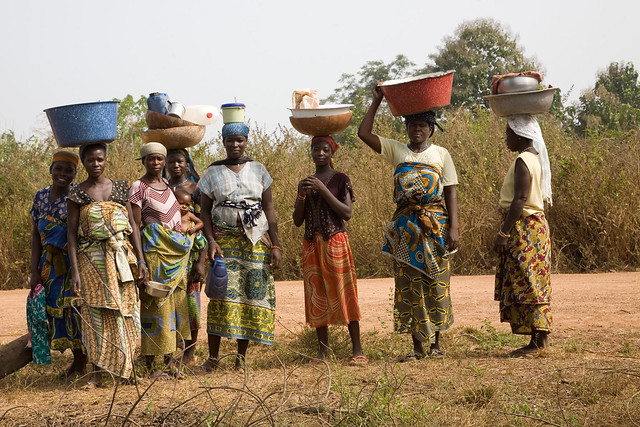
More than two-thirds of the population in Africa must leave their home to fetch water for drinking and domestic use. It is estimated that some 40 billion hours of labor each year are spent hauling water, a responsibility often borne by women and children. Cutting the walking time to a water source by just 15 minutes can reduce under-five mortality of children by 11 percent, and slash the prevalence of nutrition-depleting diarrhea by 41 percent.

Paragraphs

This paper was prepared for Stanford University’s Global Food Policy and Food Security Symposium Series, hosted by the Center on Food Security and the Environment, and supported by the Bill and Melinda Gates Foundation.


Sub-Saharan Africa (SSA) is home to two-thirds of the world’s ultra-poor today. This paper offers current thinking on the structural causes of the spatially concentrated, persistent ultra-poverty that has plagued Africa for a generation and some key entry points for facilitating Africans’ escape from persistent ultra-poverty.

The increased recognition of persistent ultra-poverty has rekindled long-dormant interest in poverty traps. The essence of a poverty trap is that there exists one or more low equilibrium level(s) of well-being in which people appear caught unnecessarily. Small adjustments fail to move people out of those equilibria sustainably. Rather, systems must change, major positive shocks must occur, or both. And in the absence of systemic change, recurring adverse shocks only drive more people into the trap.

The ultra-poverty trap that characterizes much of rural SSA today is intimately caught up with (i) the bidirectional interrelationship among hunger, ill-health, low productivity, weak institutions and natural resources degradation, all of which become manifest in low incomes, (ii) poor initial conditions associated with health and nutrition, especially early in childhood, but also with the state of infrastructure and the natural resource base on which rural livelihood disproportionately depend, and (iii) uninsured risk exposure, which is especially severe in rural areas and in agriculture. The closely coupled nature of these problems adds substantially to the challenge of addressing any one of them on its own and thereby makes integrated strategies essential. 

The available theory and evidence suggests that the policy focus must fall squarely on stimulating a smallholder food productivity revolution. Toward that end, the paper concludes by identifying and explaining key entry points for assisting the escape from persistent ultra-poverty in sub-Saharan Africa.

  1. Build and protect the productive asset endowments of the ultra-poor
  2. Improve the productivity of the ultra-poor’s current asset holdings
  3. Improve risk management options for the ultra-poor
  4. Facilitate favorable transitions out of agriculture

Although the topic of persistent ultra-poverty would seem to lend itself to a pessimistic ending, the future for Africa is actually rather hopeful. The East Asian experience demonstrates that mass, rapid escape from persistent ultra-poverty is feasible. Real agricultural output growth rates are accelerating in SSA, nearly doubling from the 1980s rate so that per capita food output is growing again, helping reduce rural poverty rates in countries enjoying increased agricultural productivity. Finally, the  policymaking and donor communities are now appropriately focusing on how best to stimulate investment incentives, productivity growth, risk management and productive transitions out of agriculture. These broad foci are appropriate and reasonably well-grounded in both theory and empirical evidence.  

All Publications button
1
Publication Type
Books
Publication Date
Journal Publisher
Center on Food Security and the Environment
Authors
-

Food and agricultural policy experts Prabhu Pingali and Philip Pardey will each speak on trends in productivity and investments in technology, survey of constraints to productivity, incentives and investment, and opportunities to raise productivity.

The Green Revolution - past successes, unfinished business, and the way forward

Pingali will review strategic components of the Green Revolution and its achievement and limits in terms of agricultural productivity improvement and broader impact at social, environmental and economic levels, including its impact on food and nutrition security. Lessons learned and the strategic insights these provide will be reviewed as the world is preparing a "redux" version of the Green Revolution with more integrative environmental and social impact combined with agricultural and economic development. Pingali will also point to core research & policy gaps that can enhance further spread and sustainable adoption of productivity enhancing technologies.

Image

Prabhu Pingali is the Deputy Director of Agricultural Development at the Bill and Melinda Gates Foundation. Formerly, he served as Director of the Agricultural and Development Economics Division of the Food and Agriculture Organization (FAO) of the United Nations. Pingali was elected to the U.S. National Academy of Sciences as a Foreign Associate in May 2007, and he was elected Fellow of the American Agricultural Economics Association in 2006. Pingali was the President of the International Association of Agricultural Economists (IAAE) from 2003-06. Pingali has over twenty five years of experience in assessing the extent and impact of technical change in agriculture in developing countries, including Asia, Africa and Latin America.

 African Agricultural R&D and Productiivity Growth in a Global Setting

Given the continuing importance of agriculture in most African economies, an in-depth understanding of the past and likely future productivity performance of African agriculture is key to assessing the overall economic growth and development prospects of the region. African agriculture operates in increasingly interconnected global commodity markets, so the relative productivity performance of African vis-à-vis rest-of-world agriculture is also relevant. This talk will present new evidence on African agricultural productivity performance and place that evidence in relation to the evolving pattern of agricultural productivity growth worldwide. Technological change is a principal driver of productivity growth, and new, updated evidence on the trends in R&D investments that give rise to these technological changes will also be presented and discussed. The productivity effects of R&D play out over comparatively long periods of time demanding a long-run look at these developments.    
 

Image

Philip Pardey is Professor of Science and Technology Policy in the Department of Applied Economics, and Director of the University of Minnesota's International Science and Technology Practice and Policy (InSTePP) center. His research deals with the finance and conduct of R&D globally, methods for assessing the economic impacts of research, and the economic and policy (especially intellectual property) aspects of genetic resources and the biosciences. He is a Fellow of the American Agricultural Economics Association and a Distinguished Fellow of the Australian Agricultural and Resource Economics Society.

Bechtel Conference Center

Prabhu Pingali Deputy director, Agricultural Development Speaker Bill & Melinda Gates Foundation
Philip Pardey Professor of Science and Technology, Applied Economics Speaker University of Minnesota
Symposiums
-


Christopher Barrett reviews the evidence on persistent poverty with a focus on rural Africa. He emphasizes the importance of asset accumulation, productivity growth, risk management and the sociopolitical institutions that govern economic activity. Barrett's talk synthesizes lessons learned about what works, what doesn't and why, and identifies key topics in need of further investigation.

William Masters, Professor of Food Policy in the Friedman School of Nutrition at Tufts University, will join the conversation as a discussant following Barrett's presentation. 

Biography

Christopher Barrett is the Stephen B. & Janice G. Ashley Professor of Applied Economics and Management and International Professor of Agriculture at Cornell University. He teaches and does research primarily in poverty and international development. His research program also has strong links to international, agricultural, environmental and micro economics as well as to applied econometrics. He is a Faculty Fellow and Associate Director, Economic Development Programs, at the new Cornell Center for a Sustainable Future. The Center is a major Cornell initiative aimed at promoting cutting-edge research on sustainable development in collaboration with key external partners to achieve significant real-world impact. He is also the Director of Cornell's Food Systems and Poverty Reduction IGERT program.

Bechtel Conference Center

Christopher Barrett Stephen B. & Janice G. Ashley Professor of Applied Economics and Management, International Professor of Agriculture Speaker Cornell University
William Masters Professor of Food Policy Commentator Friedman School of Nutrition, Tufts
Symposiums

Providing food security for a world that will be warmer, more populous, and continually developing requires the implementation of sound policies that enhance food and agricultural consumption, production, incomes, and trade. FSE is in the midst of hosting a two-year, 12-lecture symposium series on Global Food Policy and Food Security.

Subscribe to Nutrition