Water

Stanford Woods Institute for the Environment
473 Via Ortega
Stanford, CA 94305-4020

0
Research Associate
Lecturer
Pickering.png MS, PhD

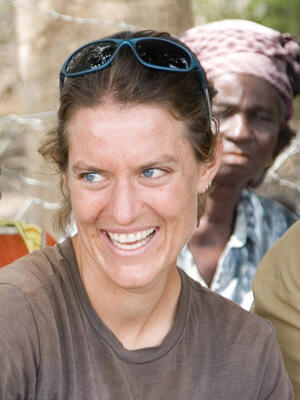
Amy Pickering is a research associate and lecturer at Stanford University. She received a BS in biological engineering at Cornell University, a MS in environmental engineering from the University of California, Berkeley and a PhD in interdisciplinary environment and resources at Stanford University. Her current research interests include understanding the relationship between water access, food security, sanitation and infectious disease in rural communities in Kenya, Bangladesh, and Mali.

Authors
News Type
News
Date
Paragraphs

Outside of China, the world now has more food insecure and nutrient deficient people than it had a decade ago, and the prevalence of obesity-related diabetes, high blood pressure and cardio-vascular diseases is increasing at very rapid rates. Expanded food production has done little to address the fact that between one-third and one-half of all deaths in children under five in developing countries are still related to malnutrition.

“With only three years away from the Millennium Development Goals deadline, this is a terrible track record,” said food and nutrition policy expert Per Pinstrup-Andersen at FSE's Global Food Policy and Food Security Symposium Series last week.  

Pinstrup-Andersen, the only economist to win the World Food Prize (the ultimate award in the food security field), has dedicated his career to understanding the linkages between food, nutrition, and agriculture. What is driving persistent food insecurity and malnutrition in a food abundant world?

Poor food supply management is part of the problem. According to the United Nations Food and Agricultural Organization (FAO), 20-30% of food produced globally is lost every year. That’s enough to feed an additional 3-3.5 billion people.

Jatropha in Africa. Photo credit: Ton Rulkens/flickr.

Biofuels production, such as jatropha in Africa, now competes with food for land, and climate change is already negatively impacting crop yields in regions straddling the equator—with major implications for food supply.

For low-income consumers in both the U.S. and developing countries increasing and more volatile food prices, such as those seen in 2007, are also driving food insecurity. Poor consumers respond by purchasing cheaper, less nutrient food, and less of it.

Nutritional value chain

Consensus is developing—at least rhetorically—among national policymakers and international organizations that investments in agricultural development must be accelerated. Members of the G8 and G20 have committed $20 billion in international economic support for such investments and some developing countries such as Ethiopia and Ghana are planning large new investments.

While most of these recent initiatives focus on expanded food supplies, there is an increasing understanding that merely making more food available will not assure better food security, nutrition, and health at the household and individual levels.

“It matters for health and nutrition how increasing food supplies are brought about and of what it consists,” said Pinstrup-Andersen. “We need to turn the food supply chain into a nutritional value chain.”

Diet diversity is incredibly important for good nutrition. Agricultural researchers and food production companies need to look at a number of different commodities, not just the major food staples, said Pinstrup-Andersen.

“The Green Revolution successfully increased the production of corn, rice, and wheat, increasing incomes for farmers, and lowering prices for consumers, but now it is time to invest in fruits, vegetables and biofortification to deal with micronutrient deficiency,” said Pintrup-Andersen.

Biofortification, the breeding of crops to increase their nutritional value, offers tremendous opportunity for dealing with malnutrition in the developing world, but is not widely available.

This is particularly important for areas in sub-Saharan Africa where between one and three and one and four people are short in calories, protein, and micronutrients. Obesity is actually going up in these countries with the introduction of cheap, processed, energy-dense foods (those high in sugar and fat) contributing to the diabetes epidemic.

Pathways to better health

Women hauling water to their gardens in Benin.

The path to better health and nutrition must look beyond the availability of food at affordable prices, clean water, and good sanitation, and consider behavioral factors such as time constraints for women in low-income households.

“Field studies have shown time and time again that one of the main factors preventing women from providing themselves and their families with good nutrition is time,” explained Pinstrup-Andersen.

He told the story of a woman in Bolivia too burdened with farm and household responsibilities to take the time to breastfeed her six-month old daughter. Enhancing productivity in activities traditionally undertaken by women could be a key intervention to improving good health and nutrition at the household level.

Access is another issue. A household may be considered food secure, in that sufficient food may be available, but food may not be equally allocated in the household.

“If we focus on the most limiting constraint we can be successful,” said Pinstrup-Anderen. “But we must tailor our response to each case.”

For sub-Saharan Africa, this includes investments in rural infrastructure, roads, irrigation systems, micronutrient fertilizer, climate adaptation strategies, and other barriers holding back small farmers.

Fortunately, there has been a renewed attention to the importance of guiding food system activities towards improved health and nutrition. The Global Agriculture and Food Security Program (GAFSP), which facilitates the distribution of some of the G8 and G20 $20 billion commitments, prescribes that country proposals for funding of agricultural development projects must show a clear pathway from the proposed agricultural change to human nutrition.

“But it’s not going to be easy to implement good policies,” warned Pinstrup-Andersen. “There are few incentives in government for multidisciplinary problem solving. The economy is set up around silos and people are loyal to their silos. Agricultural and health sectors are largely disconnected in their priorities, policy, and analysis."

Incentives must change to encourage working across ministries and disciplines to identify the most important health and nutrition-related drivers of food systems, impact pathways, and policy and program interventions to find win-wins for positive health and nutrition.

Hero Image
carrots celebration logo
All News button
1
Paragraphs

Freshwater scarcity has been cited as the major crisis of the 21st century, but it is surprisingly hard to describe the nature of the global water crisis. We conducted a meta- analysis of 22 coupled humanwater system case studies, using qualitative comparison analysis (QCA) to identify water resource system outcomes and the factors that drive them. The cases exhibited different outcomes for human wellbeing that could be grouped into a six syndromes: groundwater depletion, ecological destruction, drought-driven conflicts, unmet subsistence needs, resource capture by elite, and water reallocation to nature. For syndromes that were not successful adaptations, three characteristics gave cause for concern: (1) unsustainabilitya decline in the water stock or ecosystem function that could result in a long-term steep decline in future human wellbeing; (2) vulnerabilityhigh variability in water resource availability combined with inadequate coping capacity, leading to temporary drops in human wellbeing; (3) chronic scarcitypersistent inadequate access and hence low conditions of human wellbeing. All syndromes could be explained by a limited set of causal factors that fell into four categories: demand changes, supply changes, governance systems, and infrastructure/technology. By considering basins as members of syndrome classes and tracing common causal pathways of water crises, water resource analysts and planners might develop improved water policies aimed at reducing vulnerability, inequity, and unsustainability of freshwater systems.

All Publications button
1
Publication Type
Journal Articles
Publication Date
Journal Publisher
Water Resources Research
Authors
Eric Lambin
Barton H. Thompson
Scott Rozelle
Authors
David Lobell
News Type
News
Date
Paragraphs
Rising temperatures, an uncertain water supply and more abundant pests threaten California's multi-billion-dollar crop industry. FSE agricultural scientist David Lobell weighs in on climate impacts on California's cherry crop--the canary in the climate coal mine--as part of a half-hour documentary on "Heat and Harvest", a co-production of KQED and the Center for Investigative Reporting,
Hero Image
Cherries Flickr Loving Earth logo Flickr/Loving Earth
All News button
1
News Type
News
Date
Paragraphs
Pamela Matson, Dean of the School of Earth Sciences and FSE researcher, discusses agricultural research in the Yaqui Valley, Mexico and how it relates to the Green Revolution with Stanford's Generation Anthropocene. She also reflects upon the politics of sustainable agriculture and how we might go about feeding the 9 billion people we expect in the coming decades.
Hero Image
Pam dean 11
All News button
1
Authors
Jennifer Burney
News Type
Q&As
Date
Paragraphs

Jennifer Burney, named a National Geographic Emerging Explorer in 2011, continues her work on agricultural solutions for struggling farmers. She observes, for example, that “as great as local organic food may be in my own kitchen, we’ll never feed the whole world that way. Like it or not, ‘Big Agriculture’ is why we’ve been able to sustain a hungry planet; and thanks to investments in technology, significant climate impact has been mitigated.” One key contribution she made was introducing solar irrigation to farmers in Benin, Africa.

Click here to read full interview.

Hero Image
beninsolarpanel self Marshall Burke
All News button
1
Authors
David Lobell
News Type
News
Date
Paragraphs

Originally appeared in The Chicago Council's Global Agricultural Development Initiative Global Food For Thought blog.


Image
For all of the talk about the need to adapt to climate change, we still know fairly little about two basic questions: what works best, and how much can adaptation deliver? It‘s time to learn quickly.

Why don’t we know more? It would be easy to blame our ignorance on complacency. There is a tendency to marvel at the progress made in agriculture in the past 50 years, and assume it can handle anything. For example, the USDA declared in the early 1970s that new technologies meant “man has reduced variation in yields in both good and bad weather.” This optimism quietly faded after a series of bad harvests in the late 1970’s and 1980’s, including the big drought of 1988. People realized that a period of unusually benign weather, and not the technological gains themselves, had limited volatility during the middle of the 20th century.

It is also tempting to blame ignorance on inexperience. After all, many people continue to view climate change as something to deal with in the future. But the evidence is clear that climate has already been changing over the past 30 years in most agricultural areas, and farmers are doubtlessly trying to adapt. Up until now, the United States was an exception to that trend. But the 2012 drought has changed that, and projections indicate that years like this will be increasingly common in the coming decades.

With widespread evidence for climate change and its impacts, complacency and inexperience should give way to rigorous evaluations of what has happened. For example, why was US agriculture not better prepared for the 2012 drought? And did anything work well that can be scaled up?

A lot has changed in US agriculture since the 1988 drought, and many of the changes were textbook examples of what should help to reduce impacts of hot summers. Farmers now sow corn and soybeans more than a week earlier on average, and use longer maturing varieties than in 1988. Advances in cold tolerance along with spring warming trends allowed corn to expand in northern states where temperatures are cooler. For example, North and South Dakota increased corn area by more than 35% (nearly 2.5 million acres) just since 2009. Carbon dioxide levels, which improve crop water use efficiency, have increased by more than 10% since 1988. And farmers have begun to grow drought tolerant seeds that were unavailable in 1988.

Yet when the 2012 drought arrived, with fairly similar characteristics to 1988, impacts on crop yields were roughly the same. Corn yields are expected to be about 25% below trend, close to the 28% drop in 1988.

What can we learn from this experience? It is too early to say anything definitive, but two explanations seem plausible. First, it may be that some of the above changes were truly beneficial, but were counteracted by other changes making agriculture more, not less, sensitive to weather. For example, breeding progress in corn has generally been faster for good conditions than bad. As farmers become even better at eliminating yield losses from pests, nutrient stress, and other factors, the benefits of having favorable rainfall and temperature become that much greater, and the relative damages of not having them become that much worse.

A second possibility, of course, is that the adaptive changes in agriculture simply did not help much in dealing with adverse weather. For example, migrating corn northward may help, but the vast majority of corn production remains where it has been for decades, so the quantitative effect is small.

Hopefully researchers will quickly distinguish between these and other explanations, and the lessons can help guide efforts to further adapt. But any explanation will likely imply that there are limits to how much adaptation can reduce impacts of climate change. This fact does not diminish the urgency and importance of efforts to adapt to climate variability and change throughout the world. But it is a reminder that greenhouse gas mitigation is pivotal in any strategy to reduce impacts of climate change. Adaptation can only do so much.

Hero Image
Lobell Anne Schnoebelen 9 12 cropped Anne Schnoebelen
All News button
1
0
kmoiyoi.png

Katrina grew up in Nairobi, Kenya, and spent much of her youth camping on the East African savannah and exploring coral reefs in the Indian Ocean. She moved to the US at the age of eighteen, and holds a B.A. from Brown University in International Relations, an M.A. from the University of Washington in Marine Affairs, and a PhD in Environment and Resources from the Stanford Emmett Interdisciplinary Graduate Program in Environment and Resources.

Her professional experience includes several years in international development consulting in Washington DC, where she provided programmatic and technical support to USAID-funded fisheries and water management programs in South Asia and Sub-Saharan Africa. Working with the UN Food & Agriculture Organization's Bay of Bengal Large Marine Ecosystem Program, she reviewed the status of marine protected areas in eight South Asian countries (Maldives, Sri Lanka, India, Bangladesh, Myanmar, Thailand, Malaysia and Indonesia) and presented recommendations to senior government officials from each country on ways to improve marine resource management across borders. In the field of agriculture, she worked with a private drip irrigation and greenhouse company in Israel, and also co-founded and ran a farm with 200+ customers on the outskirts of Tel Aviv. Most recently, she traveled to Thailand, Indonesia and the Philippines to provide technical advice on the design of a marine fisheries traceability program meant to improve food security and the health of marine ecosystems. She is currently the Director of Sustainability for Victory Farms.

The Yaqui Valley is the birthplace of the Green Revolution and one of the most intensive agricultural regions of the world, using irrigation, fertilizers, and other technologies to produce some of the highest yields of wheat anywhere. It also faces resource limitations, threats to human health, and rapidly changing economic conditions. In short, the Yaqui Valley represents the challenge of modern agriculture: how to maintain livelihoods and increase food production while protecting the environment.

-

Effective water management is one key element of agricultural innovation and growth. This talk: outlines evolving and changing good global practices with respect to water management and agriculture; examines developments in both water and agriculture in Africa; and suggests avenues which might be explored in improving water management and increasing agricultural productivity in Africa.


Image

 is the Gordon McKay Professor of the Practice of Environmental Engineering and Environmental Health at Harvard University where he directs the Harvard Water Security Initiative. He teaches undergraduate and graduate courses on water management and development. In 2010 he was nominated for the Joseph R. Levenson Prize for exceptional teaching of Harvard undergraduates.

Briscoe's career has focused on the issues of water, other natural resources and economic development. He has worked as an engineer in the government water agencies of South Africa and Mozambique; as an epidemiologist at the Cholera Research Center in Bangladesh; and as a professor of water resources at the University of North Carolina. In his 20-year career at the World Bank, he held high-level technical positions, including Country Director for Brazil (the World Bank’s biggest borrower). Mr. Briscoe's role in shaping the governance and strategy of the World Bank is the subject of a chapter in the definitive recent history of the Bank, Sebastian Mallaby's The World's Banker (Penguin, 2006).

Image

 is an Assistant Professor of Science, Technology, Engineering, and Policy in the School of International Relations and Pacific Studies at the University of California, San Diego. She is also an affiliate of Stanford University's Center on Food Security and the Environment (FSE), where she was previously a postdoctoral researcher. Jennifer is a physicist by training whose research focuses on simultaneously achieving global food security and mitigating climate change. She designs, implements, and evaluates technologies for poverty alleviation and agricultural adaptation, and she studies the links between energy poverty and food and nutrition security, the mechanisms by which energy services can help alleviate poverty, and the environmental impacts of food production and consumption. Much of Jennifer's current research focuses on the developing world.

Bechtel Conference Center

John Briscoe Gordon McKay Professor of the Practice of Environmental Engineering Speaker Harvard University
0
Professor, Earth System Science
Professor, Environmental Social Sciences
Senior Fellow, Freeman Spogli Institute for International Studies
burney_jennifer.jpeg Phd

Jennifer Burney is deputy director of the Center on Food Security & the Environment at Stanford University and member of the National Geographic Explorers family. Burney is a physicist by training whose research focuses on simultaneously achieving global food security and mitigating climate change. Her research interests center on the creation, implementation, and rigorous evaluation of technologies that impact human health and welfare. Jen earned her PhD in physics from Stanford. 

Date Label
Jennifer Burney Assistant Professor of Science, Technology, Engineering, and Policy in the School of International Relations and Pacific Studies Commentator University of California, San Diego
Symposiums
Subscribe to Water