Science and Technology
Authors
Jennifer Burney
News Type
News
Date
Paragraphs
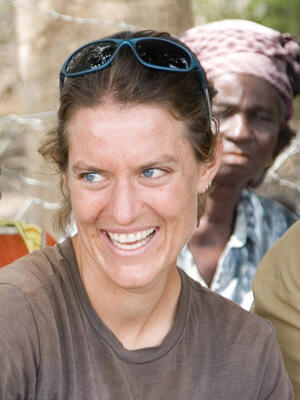
FSE's Benin solar market garden project was picked as one of the most five hopeful energy stories of 2012 by National Geographic. Jennifer Burney, FSE fellow and lead on the Benin project, is a National Geographic Emerging Explorer. FSE began its partnership with the Solar Electric Light Fund in 2007 and continues to work together to spread the technology into new villages in West Africa.
Hero Image
woman panel crops hl Jennifer Burney
All News button
1
Paragraphs

Currently, more than two-thirds of the population in Africa must leave their home to fetch water for drinking and domestic use. The time burden of water fetching has been suggested to influence the volume of water collected by households as well as time spent on income generating activities and child care. However, little is known about the potential health benefits of reducing water fetching distances. Data from almost 200 000 Demographic and Health Surveys carried out in 26 countries were used to assess the relationship between household walk time to water source and child health outcomes. To estimate the causal effect of decreased water fetching time on health, geographic variation in freshwater availability was employed as an instrumental variable for one-way walk time to water source in a two-stage regression model. Time spent walking to a household’s main water source was found to be a significant determinant of under-five child health. A 15-min decrease in one-way walk time to water source is associated with a 41% average relative reduction in diarrhea prevalence, improved anthropometric indicators of child nutritional status, and a 11% relative reduction in under-five child mortality. These results suggest that reducing the time cost of fetching water should be a priority for water infrastructure investments in Africa.

All Publications button
1
Publication Type
Journal Articles
Publication Date
Journal Publisher
Environmental Science and Technology
Authors
Jenna Davis
Authors
Sharon Gourdji
News Type
News
Date
Paragraphs

Scientists are making progress in helping millions of wheat farmers adapt to hotter conditions, but the gains have been uneven, reports a new study led by Stanford University. New approaches to breeding are needed to withstand increasingly common heat waves and keep pace with growing global food demand.

Wheat is the most widely grown crop in the world; unfortunately it is also one of the most sensitive to future global warming. Scientists around the world strive to develop new wheat varieties each year that incorporate improved features, much like car companies release new models each year. Different strategies are commonly used; some target fully irrigated conditions that favor very high yields, while others focus on dry and hot conditions where yield maintenance under stress is a priority.

The team, which includes scientists from Stanford and the International Maize and Wheat Improvement Center (known as CIMMYT), evaluated 25 years of data from historical trials around the globe and analyzed the outcome of different past breeding approaches to help prioritize future strategies. The fully irrigated nursery, known as the elite spring wheat yield trials, produces varieties that are released for the majority of wheat farmers in countries like India and Egypt each year. While cultivars selected under stressed conditions showed significant yield progress at higher temperatures, the elite trials did not.

“There has been very impressive progress in improving yields for the elite varieties at the cooler temperatures that wheat prefers,” explains lead author Sharon Gourdji, a post-doctoral scholar in Stanford’s department of Environmental Earth System Science and Center on Food Security and the Environment (FSE).

“However, to date, our analysis shows a lack of yield gains for these varieties in hot environments over the past 25 years. Along with the gains in cool conditions, this means that the yield difference between cool and hot conditions is getting larger.”

A CIMMYT researcher plants wheat seed in pots in the center's greenhouse facilities. Photo credit: X. Fonseca/CIMMYT

"I think we have learned that the current main approach to breeding won't quite cut it in terms of adapting wheat to climate change,” said co-author David Lobell, assistant professor in Environmental Earth System Science and FSE center fellow. “That is useful information as breeding centers try to raise their game to contend with long-term warming."

Lobell notes that there are good reasons why improved heat tolerance for the elite varieties has not happened naturally.

“Breeding is tough since scientists are aiming for so many traits at once – for example, disease resistance, high yields, and good quality for bread making. Adding heat tolerance is like telling a scout looking for a superstar athlete, ‘by the way, make sure he’s a straight A student’,” said Lobell.

One important lesson from the study is that sifting through historical data can help identify what works and what does not.

“It can often be a hard sell to have breeders take the time to send their data back once they have selected their varieties and moved on,” explains CIMMYT wheat physiologist and co-author Matthew Reynolds. “This study clearly demonstrates the advantage of having these data to assess progress. It shows the genetic potential of wheat to adapt to warmer-than-usual conditions, and reinforces the value of screening under stress as a strategy for adaptation to climate change.”

The progress in the nursery targeted towards stress conditions shows that it is possible to make sizable gains in improving heat tolerance. But whether this can be combined with continued high performance under cooler conditions remains to be seen.

“It is critically important for farmers that they not only survive the bad or hot years, but that they can take full advantage of the favorable years” says Gourdji. “What is needed is a breeding strategy that can successfully achieve both.”

This work was supported by a grant from the Rockefeller Foundation. Additional co-authors of the study include CIMMYT’s Ky Mathews and Jose Crossa.

All News button
1
Authors
Dane Klinger
News Type
News
Date
Paragraphs

The global demand for seafood is rising rapidly with a growing population consuming larger amounts of fish in their diets. Most of the additional demand for seafood is now met by aquaculture as global catches from wild fisheries have stagnated or decreased since the mid-1980s. 

Can the aquaculture sector avoid some of the large resource and environmental problems that have plagued the agricultural and livestock sectors during the past several decades? 

Aquaculture is now the fastest-growing animal food production sector and will soon supply more than half of the world's seafood. The industry can play a vital role in ensuring access to affordable seafood and in generating income from the sale of seafood in both developed and developing countries.

Although aquaculture has the potential to feed millions of people, some types of aquaculture production may severely degrade aquatic ecosystems, pose health risks to consumers, reduce incomes and employment in the capture fisheries sector, and diminish food resources for poor populations.

A study by FSE director Rosamond L. Naylor and Stanford Ph.D. student Dane Klinger explores potential solutions to the industry's range of resource and environmental problems. These include novel culture systems; alternative feed strategies; and species choices by stage of adoption, benefits, costs and constraints. The study also considers promising technologies and policies that could provide incentives for innovation and environmental improvement.

"Rethinking aquaculture production with an integrated mind-set is needed to tackle the simultaneous challenges of feed and energy demands, containment of wastes, pathogens, and escaped fish, land and water requirements, and consumer preferences," said Klinger. 

Environmental regulations, international standards, labeling, and information strategies can help provide incentives to producers to adopt improved technologies and management practices, but they need to be coordinated and promoted with care to prevent excessive costs to producers and confusion for consumers.

Hero Image
fishfeed
All News button
1
Paragraphs

Freshwater scarcity has been cited as the major crisis of the 21st century, but it is surprisingly hard to describe the nature of the global water crisis. We conducted a meta- analysis of 22 coupled humanwater system case studies, using qualitative comparison analysis (QCA) to identify water resource system outcomes and the factors that drive them. The cases exhibited different outcomes for human wellbeing that could be grouped into a six syndromes: groundwater depletion, ecological destruction, drought-driven conflicts, unmet subsistence needs, resource capture by elite, and water reallocation to nature. For syndromes that were not successful adaptations, three characteristics gave cause for concern: (1) unsustainabilitya decline in the water stock or ecosystem function that could result in a long-term steep decline in future human wellbeing; (2) vulnerabilityhigh variability in water resource availability combined with inadequate coping capacity, leading to temporary drops in human wellbeing; (3) chronic scarcitypersistent inadequate access and hence low conditions of human wellbeing. All syndromes could be explained by a limited set of causal factors that fell into four categories: demand changes, supply changes, governance systems, and infrastructure/technology. By considering basins as members of syndrome classes and tracing common causal pathways of water crises, water resource analysts and planners might develop improved water policies aimed at reducing vulnerability, inequity, and unsustainability of freshwater systems.

All Publications button
1
Publication Type
Journal Articles
Publication Date
Journal Publisher
Water Resources Research
Authors
Eric Lambin
Barton H. Thompson
Scott Rozelle
-

Paul Collier will talk about how to manage the difference between helpful and damaging commercialisation, and puts forth three arguments. First, we need to face the tough reality that African food production has failed to keep pace with demand over the course of several decades, suggesting that there is a deep problem with respect to innovation and investment given the way African agriculture has been organised. Second, we need to accept that climate change, population growth, and income gains from natural resources will all stress this imbalance further: the prospect is for widening food deficits with business as usual. Third, two major changes are afoot. Globally, the model of commercial tropical agriculture pioneered in Brazil has demonstrated that output can be raised very substantially by changing the mode of organisation. Africa is now starting to open land markets to large foreign management. Superficially this looks like Brazil2, but it may instead be a wave of speculative acquisitions triggered by the price peaks of 2008.

Collier is the Director of the Centre for the Study of African Economies and Professor of Economics and Public Policy at the Blavatnik School of Government, Oxford University. He is currently Advisor to the Strategy and Policy Department of the IMF, advisor to the Africa Region of the World Bank; and he has advised the British Government on its recent White Paper on economic development policy. He has been writing a monthly column for the Independent, and also writes for the New York Times, the Financial Times, the Wall Street Journal, and the Washington Post. His research covers the causes and consequences of civil war; the effects of aid and the problems of democracy in low-income and natural-resources rich societies.

Derek Byerlee's talk will lay out a number of models of inclusive agribusiness growth, grouped into three categories (i) institutional arrangements for improving productivity of smallholders operating in spot markets, (ii) various types of contract farming arrangements, and (iii) large-scale farms that generate jobs and/or include community equity shares. The institutional and policy context as well as commodity characteristics that favor these models are discussed within a simple transactions cost framework. He will also discuss cross-cutting policy priorities to enable the growth of commercial agriculture and agribusiness. These include continuing reforms to liberalize product and input markets, access to technology and skills, stimulating financial and risks markets, securing land rights, and investment in infrastructure through public-private partnerships. 

Byerlee has dedicated his career to agriculture in developing countries, as a teacher, researcher, administrator and policy advisor. He has lived and worked for a total of 20 years in the three major developing regions-Africa, Asia, and Latin America. After beginning in academia at Michigan State University, he spent the bulk of his career at the International Maize and Wheat Improvement Center (CIMMYT). There as a economist and research manager he made notable contributions in forging a new spirit of collaboration between scientists, economists and farmers. He also published widely on efficiency of research systems, spillovers, and sustaining productivity in post green revolution agriculture. After joining the World Bank in 1994, he has applied his experience of research systems to finding innovative approaches to funding and organizing agricultural research, including emerging challenges in biotechnology policy. Since 2003, he has provided strategic direction and led policy world for the agricultural and rural sector in the World Bank.


Bechtel Conference Center

Paul Collier Director, Centre for the Study of African Economies, Oxford University Speaker
Derek Byerlee Independent Scholar, Director, 2008 World Development Report Speaker
Symposiums
Authors
Jennifer Burney
News Type
Q&As
Date
Paragraphs

Jennifer Burney, named a National Geographic Emerging Explorer in 2011, continues her work on agricultural solutions for struggling farmers. She observes, for example, that “as great as local organic food may be in my own kitchen, we’ll never feed the whole world that way. Like it or not, ‘Big Agriculture’ is why we’ve been able to sustain a hungry planet; and thanks to investments in technology, significant climate impact has been mitigated.” One key contribution she made was introducing solar irrigation to farmers in Benin, Africa.

Click here to read full interview.

Hero Image
beninsolarpanel self Marshall Burke
All News button
1
Paragraphs

Reprinted with full permission from the Proceedings of the National Academy of Sciences.

A detailed retrospective of the Green Revolution, its achievement and limits in terms of agricultural productivity improvement, and its broader impact at social, environmental, and economic levels is provided. Lessons learned and the strategic insights are reviewed as the world is preparing a reduxversion of the Green Revolution with more integrative environmental and social impact combined with agricultural and economic development. Core policy directions for Green Revolution 2.0 that enhance the spread and sustainable adoption of productivity enhancing technologies are specified.

All Publications button
1
Publication Type
Journal Articles
Publication Date
Journal Publisher
Proceedings of the National Academy of Sciences
Authors
-

Effective water management is one key element of agricultural innovation and growth. This talk: outlines evolving and changing good global practices with respect to water management and agriculture; examines developments in both water and agriculture in Africa; and suggests avenues which might be explored in improving water management and increasing agricultural productivity in Africa.


Image

 is the Gordon McKay Professor of the Practice of Environmental Engineering and Environmental Health at Harvard University where he directs the Harvard Water Security Initiative. He teaches undergraduate and graduate courses on water management and development. In 2010 he was nominated for the Joseph R. Levenson Prize for exceptional teaching of Harvard undergraduates.

Briscoe's career has focused on the issues of water, other natural resources and economic development. He has worked as an engineer in the government water agencies of South Africa and Mozambique; as an epidemiologist at the Cholera Research Center in Bangladesh; and as a professor of water resources at the University of North Carolina. In his 20-year career at the World Bank, he held high-level technical positions, including Country Director for Brazil (the World Bank’s biggest borrower). Mr. Briscoe's role in shaping the governance and strategy of the World Bank is the subject of a chapter in the definitive recent history of the Bank, Sebastian Mallaby's The World's Banker (Penguin, 2006).

Image

 is an Assistant Professor of Science, Technology, Engineering, and Policy in the School of International Relations and Pacific Studies at the University of California, San Diego. She is also an affiliate of Stanford University's Center on Food Security and the Environment (FSE), where she was previously a postdoctoral researcher. Jennifer is a physicist by training whose research focuses on simultaneously achieving global food security and mitigating climate change. She designs, implements, and evaluates technologies for poverty alleviation and agricultural adaptation, and she studies the links between energy poverty and food and nutrition security, the mechanisms by which energy services can help alleviate poverty, and the environmental impacts of food production and consumption. Much of Jennifer's current research focuses on the developing world.

Bechtel Conference Center

John Briscoe Gordon McKay Professor of the Practice of Environmental Engineering Speaker Harvard University
0
Professor, Earth System Science
Professor, Environmental Social Sciences
Senior Fellow, Freeman Spogli Institute for International Studies
burney_jennifer.jpeg Phd

Jennifer Burney is deputy director of the Center on Food Security & the Environment at Stanford University and member of the National Geographic Explorers family. Burney is a physicist by training whose research focuses on simultaneously achieving global food security and mitigating climate change. Her research interests center on the creation, implementation, and rigorous evaluation of technologies that impact human health and welfare. Jen earned her PhD in physics from Stanford. 

Date Label
Jennifer Burney Assistant Professor of Science, Technology, Engineering, and Policy in the School of International Relations and Pacific Studies Commentator University of California, San Diego
Symposiums
Authors
David Lobell
News Type
News
Date
Paragraphs

A new study out of Stanford University finds extreme temperatures are cutting wheat yields by 20 to as much as 50 percent, a finding worse than previously estimated. FSE center fellow David Lobell and his colleagues used nine years of satellite measurements of wheat growth in northern India's breadbasket, the Indo-Gangetic Plains, to analyze rates of wheat ageing after exposure to temperatures higher than 34 degrees Celsius. 

Extreme heat beyond the plant's tolerance zone damages photosynthetic cells. This causes wheat to age faster, reducing the length of the growing season and the amount and size of the wheat grains. The team's crop models found that a two degree increase in temperatures would reduce the growing season by nine days, yielding 20 percent less wheat.

As the world's second-biggest crop, lost wheat yields may become a major threat to global food security. Especially given the projection that global yields need to rise 50 percent by 2050 to feed a growing, more affluent population. The results imply that warming presents an even greater challenge to wheat than previous studies estimated, and that the effectiveness of adaptations will depend on how well they reduce crop sensitivity to very hot days, particularly in areas of the world such as India already experiencing warming conditions.

All News button
1
Subscribe to Science and Technology