Food Security

Y2E2 building
E-IPER, room 226
473 Via Ortega
Stanford, CA 94305-4020

0
PhD student, Emmett Interdisciplinary Program in Environment and Resources
Fran_Moore_Photo_hs.jpg MS

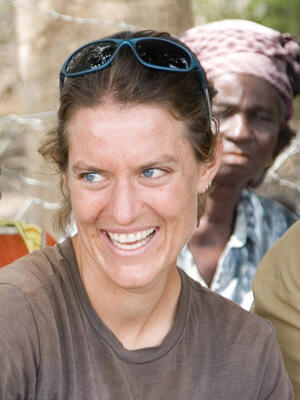
Frances C. Moore is a PhD student in the Emmett Interdisciplinary Program in Environment and Resources at Stanford University. She is working with David Lobell and Larry Goulder to study how farmers are likely to adapt to climate change so as to reduce its negative effects. Understanding the likely rate and effectiveness of this autonomous adaptation is important for accurately estimating the future impact of climate change on agricultural production and food security. Fran is combining experimental, statistical, and field-based methods from economics, anthropology and psychology with climate data and models in order to better model adaptation in agriculture.

Fran’s previous work focused on the negotiation of international climate agreements and she has published several articles on the mitigation potential of short-lived greenhouse gases in developing countries and on the negotiation of international adaptation policy. Fran is a Stanford Interdisciplinary Graduate Fellow, a former Switzer Foundation Fellow and a former NSF Graduate Research Fellow. She holds a Masters of Environmental Science from the Yale School of Forestry and Environmental Studies and a B.A., summa cum laude, in Earth and Planetary Science from Harvard University.

Lobell laboratory

Seafood plays a critical role in global food security and protein intake. The global supply of seafood increasingly comes from aquaculture - the farming of fish, shellfish, and aquatic plants. China is the dominant leader in this field, supplying about two-thirds of global aquaculture production. China also consumes an estimated one-third of global aquaculture output, a figure that is expected to increase as the country proceeds along its developmental trajectory.

Paragraphs

Reprinted with full permission from the Proceedings of the National Academy of Sciences.

A detailed retrospective of the Green Revolution, its achievement and limits in terms of agricultural productivity improvement, and its broader impact at social, environmental, and economic levels is provided. Lessons learned and the strategic insights are reviewed as the world is preparing a reduxversion of the Green Revolution with more integrative environmental and social impact combined with agricultural and economic development. Core policy directions for Green Revolution 2.0 that enhance the spread and sustainable adoption of productivity enhancing technologies are specified.

All Publications button
1
Publication Type
Journal Articles
Publication Date
Journal Publisher
Proceedings of the National Academy of Sciences
Authors
-

Effective water management is one key element of agricultural innovation and growth. This talk: outlines evolving and changing good global practices with respect to water management and agriculture; examines developments in both water and agriculture in Africa; and suggests avenues which might be explored in improving water management and increasing agricultural productivity in Africa.


Image

 is the Gordon McKay Professor of the Practice of Environmental Engineering and Environmental Health at Harvard University where he directs the Harvard Water Security Initiative. He teaches undergraduate and graduate courses on water management and development. In 2010 he was nominated for the Joseph R. Levenson Prize for exceptional teaching of Harvard undergraduates.

Briscoe's career has focused on the issues of water, other natural resources and economic development. He has worked as an engineer in the government water agencies of South Africa and Mozambique; as an epidemiologist at the Cholera Research Center in Bangladesh; and as a professor of water resources at the University of North Carolina. In his 20-year career at the World Bank, he held high-level technical positions, including Country Director for Brazil (the World Bank’s biggest borrower). Mr. Briscoe's role in shaping the governance and strategy of the World Bank is the subject of a chapter in the definitive recent history of the Bank, Sebastian Mallaby's The World's Banker (Penguin, 2006).

Image

 is an Assistant Professor of Science, Technology, Engineering, and Policy in the School of International Relations and Pacific Studies at the University of California, San Diego. She is also an affiliate of Stanford University's Center on Food Security and the Environment (FSE), where she was previously a postdoctoral researcher. Jennifer is a physicist by training whose research focuses on simultaneously achieving global food security and mitigating climate change. She designs, implements, and evaluates technologies for poverty alleviation and agricultural adaptation, and she studies the links between energy poverty and food and nutrition security, the mechanisms by which energy services can help alleviate poverty, and the environmental impacts of food production and consumption. Much of Jennifer's current research focuses on the developing world.

Bechtel Conference Center

John Briscoe Gordon McKay Professor of the Practice of Environmental Engineering Speaker Harvard University
0
Professor, Earth System Science
Professor, Environmental Social Sciences
Senior Fellow, Freeman Spogli Institute for International Studies
burney_jennifer.jpeg Phd

Jennifer Burney is deputy director of the Center on Food Security & the Environment at Stanford University and member of the National Geographic Explorers family. Burney is a physicist by training whose research focuses on simultaneously achieving global food security and mitigating climate change. Her research interests center on the creation, implementation, and rigorous evaluation of technologies that impact human health and welfare. Jen earned her PhD in physics from Stanford. 

Date Label
Jennifer Burney Assistant Professor of Science, Technology, Engineering, and Policy in the School of International Relations and Pacific Studies Commentator University of California, San Diego
Symposiums

This research area explores the national and international land and water laws that govern land tenure and property rights in sub-Saharan African countries, with the aim of understanding how large-scale land investments influence the tenure security, and therefore food security, of local farmers. The World Bank and others have identified a large agro-ecological region of African known as the Guinea Savannah as well-positioned for major agricultural development.

During a daylong Moving Mountains Symposium a stellar roster of demographers, scientists, economists and activists will attempt to answer the big question about maximum population, and they will also tell us what can be done to ensure we live in a tenable world, one in which solitude is not extirpated. They will touch on subjects like water tables, food security, women's education, immigration, and human longevity.

FSE director Roz Naylor will address the challenges of feeding the growing world. Other participants include Stanford's Paul Ehrlich, author of “The Population Bomb” and long-time leading voice on the population issue, who will talk about what will happen when the population bomb explodes. 

Telluride Conference Center, Telluride, Colorado

The Jerry Yang and Akiko Yamazaki
Environment and Energy Building
Stanford University
473 Via Ortega, Office 363
Stanford, CA 94305

(650) 723-5697 (650) 725-1992
0
Senior Fellow, Stanford Woods Institute and Freeman Spogli Institute for International Studies
William Wrigley Professor of Earth System Science
Senior Fellow and Founding Director, Center on Food Security and the Environment
Roz_low_res_9_11_cropped.jpg PhD

Rosamond Naylor is the William Wrigley Professor in Earth System Science, a Senior Fellow at Stanford Woods Institute and the Freeman Spogli Institute for International Studies, the founding Director at the Center on Food Security and the Environment, and Professor of Economics (by courtesy) at Stanford University. She received her B.A. in Economics and Environmental Studies from the University of Colorado, her M.Sc. in Economics from the London School of Economics, and her Ph.D. in applied economics from Stanford University. Her research focuses on policies and practices to improve global food security and protect the environment on land and at sea. She works with her students in many locations around the world. She has been involved in many field-level research projects around the world and has published widely on issues related to intensive crop production, aquaculture and livestock systems, biofuels, climate change, food price volatility, and food policy analysis. In addition to her many peer-reviewed papers, Naylor has published two books on her work: The Evolving Sphere of Food Security (Naylor, ed., 2014), and The Tropical Oil Crops Revolution: Food, Farmers, Fuels, and Forests (Byerlee, Falcon, and Naylor, 2017).

She is a Fellow of the Ecological Society of America, a Pew Marine Fellow, a Leopold Leadership Fellow, a Fellow of the Beijer Institute for Ecological Economics, a member of Sigma Xi, and the co-Chair of the Blue Food Assessment. Naylor serves as the President of the Board of Directors for Aspen Global Change Institute, is a member of the Scientific Advisory Committee for Oceana and is a member of the Forest Advisory Panel for Cargill. At Stanford, Naylor teaches courses on the World Food Economy, Human-Environment Interactions, and Food and Security. 

CV
Rosamond L. Naylor Speaker
Symposiums
Paragraphs

This paper looks at past and likely future agricultural growth and rural poverty reduction in the context of the overall Indian economy. The growth of India’s economy has accelerated sharply since the late 1980s, but agriculture has not followed suit. Rural population and especially the labor force are continuing to rise rapidly. Meanwhile, rural-urban migration remains slow, primarily because the urban sector is not generating large numbers of jobs in labor-intensive manufacturing. Despite a sharply rising labor productivity differential between non-agriculture and agriculture, limited rural-urban migration, and slow agricultural growth, urban-rural consumption, income, and poverty differentials have not been rising. Urban-rural spillovers have become important drivers of the rapidly growing rural non-farm sector—the sector now generates the largest number of jobs in India. Rural non-farm self-employment has become especially dynamic with farm households rapidly diversifying into the sector to increase income.

The growth of the rural non-farm sector is a structural transformation of the Indian economy, but it is a stunted one. It generates few jobs at high wages with job security and benefits. It is the failure of the urban economy to create enough jobs, especially in labor-intensive manufacturing, that prevents a more favorable structural transformation of the classic kind. Nevertheless, non-farm sector growth has allowed for accelerated rural income growth, contributed to rural wage growth, and prevented the rural economy from falling dramatically behind the urban economy. The bottling up of labor in rural areas, however, means that farm sizes will continue to decline, agriculture will continue its trend to feminization, and part-time farming will become the dominant farm model. Continued rapid rural income growth depends on continued urban spillovers from accelerated economic growth, and a significant acceleration of agricultural growth based on more rapid productivity and irrigation growth. Such an acceleration is also needed to satisfy the increasing growth in food demand that follows rapid economic growth and fast growth of per capita incomes.  

All Publications button
1
Publication Type
Books
Publication Date
Journal Publisher
Center on Food Security and the Environment
Authors
Authors
News Type
News
Date
Paragraphs

Agricultural productivity in sub-Saharan Africa remains significantly less than the rest of the world, and 25 percent of people in the region still suffer from an insufficient dietary intake of calories. Yet sub-Saharan Africa has more arable land than Asia or Latin America, and a more diverse set of cereal grains. Agriculture also accounts for 20-25 percent of GDP for the region compared with only five percent for the rest of the world.

So why is productivity in sub-Saharan Africa so low when agriculture is such a big part of the economy, asked Rosamond L. Naylor, director of the Center on Food Security Environment at last week’s Connecting the Dots conference. Lack of irrigation is part of the problem. 95 percent of farms in sub-Saharan Africa are rainfed and rely on water from a short, 4-5 month rainy season. 

“During the rainy season kids are fed pretty well,” explained Naylor. “But during the peak of the dry season up to one-third of children are severely malnourished in parts of West Africa where we have been working.”

Sub-Saharan Africa has largely missed out on the benefits of the Green Revolution that increased crop production in Asia two to three fold. Asia’s heavily irrigated agriculture took advantage of new crop varieties that were bred to take up nutrients with sufficient water availability. Groundwater sources in sub-Saharan Africa, on the other hand, are more fractured and not well understood, and surface water isn’t necessarily close to where the people are.

“But Africa has water” said Naylor. “Groundwater resources have not been sufficiently explored and rivers such as the Nile and Niger remain underutilized due to a mindset that irrigation systems must be large scale.”

This requires big investments and institutional involvement that have thus far not resulted in great payoffs. Corruption in some areas coupled with institutional and tribal issues have also contributed to failed investments.

“We need to change our investment strategies from large-scale to small-scale irrigation systems,” suggested Naylor. “Evaluate the returns from treadle, solar-power, and diesel pumps to see what works where, so that we stop investments that aren’t working and support investments where they are.”

Treadle pumps can work well if they are close to surface water, but require a lot of labor, explained Naylor. There is a huge energetic cost and an opportunity cost for someone to work the treadle pump, so it is necessary to ‘get the right technology to suit the water and labor conditions’.

Irrigation is not just about access (drawing water). It is also necessary to think about how to best distribute that water to crops (e.g. drip irrigation) and what you use them on. Production of leafy greens, for example, leads to higher income and nutritional returns.

FSE’s solar market garden project in Benin is a good example of where appropriate technologies are being applied in a cost-effective manner. Solar-powered, drip irrigation pumps have improved incomes and nutrition for participating farming groups through the year-round production of high-value crops. Proven to be a viable and profitable investment, the project is now scaling up in other villages in Benin and West Africa.

“According to the World Bank, investment in agriculture is the best bang for your buck than any other investment,” said panel moderator Jenna Davis, assistant professor in the department of civil and environmental engineering and affiliated FSE fellow.

Fortunately, the World Bank is beginning to recognize the viability and efficiency of investments in small-scale irrigation projects. NGOs and academia also have a role to play in facilitating these projects. Through these partnerships and shifts in investment strategies, the development community has a better chance of improving access to freshwater resources for some of the world’s most vulnerable and effectively addressing sub-Saharan Africa's water and food security crisis.

Hero Image
benin woman cabbage hi res
All News button
1
Subscribe to Food Security