Food Security
Authors
David Lobell
News Type
News
Date
Paragraphs

A team of researchers from Stanford University, the Carnegie Institution for Science, and Arizona State University has found that converting large swaths of land to bioenergy crops could have a wide range of effects on regional climate.

In an effort to help wean itself off fossil fuels, the U.S. has mandated significant increases in renewable fuels, with more than one-third of the domestic corn harvest to be used for conversion to ethanol by 2018. But concerns about effects of corn ethanol on food prices and deforestation had led to research suggesting that ethanol be derived from perennial crops, like the giant grasses Miscanthus and switchgrass. Nearly all of this research, though, has focused on the effects of ethanol on carbon dioxide emissions, which drive global warming.

"Almost all of the work performed to date has focused on the carbon effects," said Matei Georgescu, a climate modeler working in ASU's Center for Environmental Fluid Dynamics. "We've tried to expand our perspective to look at a more complete picture.  What we've shown is that it's not all about greenhouse gases, and that modifying the landscape can be just as important."

Georgescu and his colleagues report their findings in the current issue (Feb. 28, 2011) of the Proceedings of the National Academy of Sciences (see Direct Climate Effects of Perennial Bioenergy Crops in the United States). Co-authors are David Lobell of Stanford University's Program on Food Security and the Environment and Christopher B. Field of the Carnegie Institution for Science, also located in Stanford, California.

In their study, the researchers simulated an entire growing season with a state-of-the-art regional climate model. They ran two sets of experiments - one with an annual crop representation over the central U.S. and one with an extended growing season to represent perennial grasses. In the model, the perennial plants pumped more water from the soil to the atmosphere, leading to large local cooling. 

"We've shown that planting perennial bioenergy crops can lower surface temperatures by about a degree Celsius locally, averaged over the entire growing season. That's a pretty big effect, enough to dominate any effects of carbon savings on the regional climate." said Lobell.

The primary physical process at work is based on greater evapotranspiration (combination of evaporated water from the soil surface and plant canopy and transpired water from within the soil) for perennial crops compared to annual crops. 

"More study is needed to understand the long-term implication for regional water balance." Georgescu said. "This study focused on temperature, but the more general point is that simply assessing the impacts on carbon and greenhouse gases overlooks important features that we cannot ignore if we want a bioenergy path that is sustainable over the long haul."

All News button
1
-

Conference presentations and tutorials now available

Conference website

Stanford experts from a range of disciplines discuss the interconnections and interactions among humanity's needs for and use of food, energy, water, and environment. Drawing on their own research, the speakers will illustrate and evaluate some of the ways in which decisions in one resource area can lead to trade-offs or co-benefits in others. Symposium attendees participate in breakout sessions, led by Stanford students and faculty, on a range of challenges associated with sustainable food systems.

Stanford faculty participants include: Stacey Bent (Center on Nanostructuring for Efflicient Energy Conversion) Welcome; Roz Naylor (Program on Food Security and the Environment, Woods Institute for the Environment) The Global Food Challenge; Chris Field (Carnegie Institution Department of Global Ecology) The Food-Energy Nexus; David Lobell (Program on Food Security and the Environment, Woods Institute for the Environment) The Food-Climate Nexus; Buzz Thompson (Woods Institute for the Environment) The Food-Water Nexus; Mariano-Florentino Cuellar (Center for International Security and Cooperation, Freeman Spogli Institute for International Studies) The Food-Security Nexus; and Pamela Matson (School of Earth Sciences) The Way Forward. Breakout session topics include how to lower the carbon footprint of food, aquaculture, and how to make meat more sustainable.

Bishop Auditorium
518 Memorial Way
Stanford, CA 94305

The Jerry Yang and Akiko Yamazaki
Environment and Energy Building
Stanford University
473 Via Ortega, Office 363
Stanford, CA 94305

(650) 723-5697 (650) 725-1992
0
Senior Fellow, Stanford Woods Institute and Freeman Spogli Institute for International Studies
William Wrigley Professor of Earth System Science
Senior Fellow and Founding Director, Center on Food Security and the Environment
Roz_low_res_9_11_cropped.jpg PhD

Rosamond Naylor is the William Wrigley Professor in Earth System Science, a Senior Fellow at Stanford Woods Institute and the Freeman Spogli Institute for International Studies, the founding Director at the Center on Food Security and the Environment, and Professor of Economics (by courtesy) at Stanford University. She received her B.A. in Economics and Environmental Studies from the University of Colorado, her M.Sc. in Economics from the London School of Economics, and her Ph.D. in applied economics from Stanford University. Her research focuses on policies and practices to improve global food security and protect the environment on land and at sea. She works with her students in many locations around the world. She has been involved in many field-level research projects around the world and has published widely on issues related to intensive crop production, aquaculture and livestock systems, biofuels, climate change, food price volatility, and food policy analysis. In addition to her many peer-reviewed papers, Naylor has published two books on her work: The Evolving Sphere of Food Security (Naylor, ed., 2014), and The Tropical Oil Crops Revolution: Food, Farmers, Fuels, and Forests (Byerlee, Falcon, and Naylor, 2017).

She is a Fellow of the Ecological Society of America, a Pew Marine Fellow, a Leopold Leadership Fellow, a Fellow of the Beijer Institute for Ecological Economics, a member of Sigma Xi, and the co-Chair of the Blue Food Assessment. Naylor serves as the President of the Board of Directors for Aspen Global Change Institute, is a member of the Scientific Advisory Committee for Oceana and is a member of the Forest Advisory Panel for Cargill. At Stanford, Naylor teaches courses on the World Food Economy, Human-Environment Interactions, and Food and Security. 

CV
Rosamond L. Naylor Speaker

Jerry Yang & Akiko Yamazaki Environment & Energy Bldg.
473 Via Ortega, Room 221
Stanford, CA 94305
Phone: 650.736.4352

0
Perry L. McCarty Director of the Stanford Woods Institute for the Environment.; Professor for Interdisciplinary Environmental Studies, School of Earth, Energy & Environmental Sciences; FSI Senior Fellow, by courtesy
chris_field.png PhD

Chris Field is the Perry L. McCarty Director of the Stanford Woods Institute for the Environment.

His research focuses on climate change, ranging from work on improving climate models, to prospects for renewable energy systems, to community organizations that can minimize the risk of a tragedy of the commons.

Field has been deeply involved with national and international scale efforts to advance science and assessment related to global ecology and climate change. He served as co-chair of Working Group II of the Intergovernmental Panel on Climate Change from 2008-2015, where he led the effort on the IPCC Special Report on “Managing the Risks of Extreme Events and Disasters to Advance Climate Change Adaptation” (2012) and the Working Group II contribution to the IPCC Fifth Assessment Report (2014) on Impacts, Adaptation, and Vulnerability.

Field assumed leadership of the Stanford Woods Institute for the Environment in September 2016. His other appointments at Stanford University include serving as the Melvin and Joan Lane Professor for Interdisciplinary Environmental Studies in the School of Humanities and Sciences; Professor of Earth System Science in the School of Earth, Energy & Environmental Sciences; and Senior Fellow with the Precourt Institute for Energy. Prior to his appointment as Woods' Perry L. McCarty Director, Field served as director of the Carnegie Institution for Science's Department of Global Ecology, which he founded in 2002. Field's tenure at the Carnegie Institution dates back to 1984.

His widely cited work has earned many recognitions, including election to the U.S. National Academy of Sciences, the Max Planck Research Award, the American Geophysical Union’s Roger Revelle Medal and the Stephen H. Schneider Award for Outstanding Science Communication. He is a fellow of the American Academy of Arts and Sciences, the American Association for the Advancement of Science, and the Ecological Society of America.

Field holds a bachelor’s degree in biology from Harvard College and earned his Ph.D. in biology from Stanford in 1981.

Christopher Field Speaker

Energy and Environment Building
473 Via Ortega
Stanford CA 94305

(650) 721-6207
0
Professor, Earth System Science
Senior Fellow at the Freeman Spogli Institute for International Studies
Senior Fellow at the Stanford Woods Institute for the Environment
Senior Fellow at the Stanford Institute for Economic Policy Research (SIEPR)
Affiliate, Precourt Institute of Energy
shg_ff1a1284.jpg PhD

David Lobell is the Benjamin M. Page Professor at Stanford University in the Department of Earth System Science and the Gloria and Richard Kushel Director of the Center on Food Security and the Environment. He is also the William Wrigley Senior Fellow at the Stanford Woods Institute for the Environment, and a senior fellow at the Freeman Spogli Institute for International Studies (FSI) and the Stanford Institute for Economic Policy and Research (SIEPR).

Lobell's research focuses on agriculture and food security, specifically on generating and using unique datasets to study rural areas throughout the world. His early research focused on climate change risks and adaptations in cropping systems, and he served on the Intergovernmental Panel on Climate Change (IPCC) Fifth Assessment Report as lead author for the food chapter and core writing team member for the Summary for Policymakers. More recent work has developed new techniques to measure progress on sustainable development goals and study the impacts of climate-smart practices in agriculture. His work has been recognized with various awards, including the Macelwane Medal from the American Geophysical Union (2010), a Macarthur Fellowship (2013), the National Academy of Sciences Prize in Food and Agriculture Sciences (2022) and election to the National Academy of Sciences (2023).

Prior to his Stanford appointment, Lobell was a Lawrence Post-doctoral Fellow at Lawrence Livermore National Laboratory. He holds a PhD in Geological and Environmental Sciences from Stanford University and a Sc.B. in Applied Mathematics from Brown University.

CV
David Lobell Speaker

Jerry Yang & Akiko Yamazaki Environment & Energy Bldg.
473 Via Ortega, Rm 225
Stanford, CA 94305-4020

(650) 723-3402
0
Robert E. Paradise Professor of Natural Resources Law
buzz.jpg JD

A leading expert in environmental and natural resources law and policy, Barton H. “Buzz” Thompson, Jr., JD/MBA ’76 (BA ’72), has contributed a large body of scholarship on environmental issues ranging from the future of endangered species and fisheries to the use of economic techniques for regulating the environment. He is the founding director of the law school’s Environmental and Natural Resources Program, Perry L. McCarty Director and senior fellow of the Woods Institute for the Environment, and a senior fellow (by courtesy) at the Freeman Spogli Institute for International Studies. In 2008, the Supreme Court appointed Professor Thompson to serve as the special master in Montana v. Wyoming (137 Original). Professor Thompson is chairman of the board of the Resources Legacy Fund and the Resources Legacy Fund Foundation, a California trustee for The Nature Conservancy, and a board member of both the American Farmland Trust and the Sonoran Institute. He previously served as a member of the Science Advisory Board for the U.S. Environmental Protection Agency.

Before joining the Stanford Law School faculty in 1986, he was a partner at O’Melveny & Myers in Los Angeles and a lecturer at the UCLA School of Law. He was a law clerk to Chief Justice William H. Rehnquist ’52 (BA ’48, MA ’48) of the U.S. Supreme Court and Judge Joseph T. Sneed of the U.S. Court of Appeals for the Ninth Circuit.

Senior Fellow, Stanford Woods Institute for the Environment, and (by courtesy) the Freeman Spogli Institute for International Studies
Barton H. Thompson Speaker
Mariano-Florentino Cuéllar Speaker
Pamela A. Matson Dean of the School of Earth Sciences, Goldman Professor of Geological and Environmental Sciences and FSI Senior Fellow Speaker Stanford University
Conferences
-

Food and agricultural policy experts Prabhu Pingali and Philip Pardey will each speak on trends in productivity and investments in technology, survey of constraints to productivity, incentives and investment, and opportunities to raise productivity.

The Green Revolution - past successes, unfinished business, and the way forward

Pingali will review strategic components of the Green Revolution and its achievement and limits in terms of agricultural productivity improvement and broader impact at social, environmental and economic levels, including its impact on food and nutrition security. Lessons learned and the strategic insights these provide will be reviewed as the world is preparing a "redux" version of the Green Revolution with more integrative environmental and social impact combined with agricultural and economic development. Pingali will also point to core research & policy gaps that can enhance further spread and sustainable adoption of productivity enhancing technologies.
Image

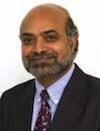
Prabhu Pingali is the Deputy Director of Agricultural Development at the Bill and Melinda Gates Foundation. Formerly, he served as Director of the Agricultural and Development Economics Division of the Food and Agriculture Organization (FAO) of the United Nations. Pingali was elected to the U.S. National Academy of Sciences as a Foreign Associate in May 2007, and he was elected Fellow of the American Agricultural Economics Association in 2006. Pingali was the President of the International Association of Agricultural Economists (IAAE) from 2003-06. Pingali has over twenty five years of experience in assessing the extent and impact of technical change in agriculture in developing countries, including Asia, Africa and Latin America.

 African Agricultural R&D and Productiivity Growth in a Global Setting

Given the continuing importance of agriculture in most African economies, an in-depth understanding of the past and likely future productivity performance of African agriculture is key to assessing the overall economic growth and development prospects of the region. African agriculture operates in increasingly interconnected global commodity markets, so the relative productivity performance of African vis-à-vis rest-of-world agriculture is also relevant. This talk will present new evidence on African agricultural productivity performance and place that evidence in relation to the evolving pattern of agricultural productivity growth worldwide. Technological change is a principal driver of productivity growth, and new, updated evidence on the trends in R&D investments that give rise to these technological changes will also be presented and discussed. The productivity effects of R&D play out over comparatively long periods of time demanding a long-run look at these developments.    

 

Image

Philip Pardey is Professor of Science and Technology Policy in the Department of Applied Economics, and Director of the University of Minnesota's International Science and Technology Practice and Policy (InSTePP) center. His research deals with the finance and conduct of R&D globally, methods for assessing the economic impacts of research, and the economic and policy (especially intellectual property) aspects of genetic resources and the biosciences. He is a Fellow of the American Agricultural Economics Association and a Distinguished Fellow of the Australian Agricultural and Resource Economics Society.

Bechtel Conference Center

Prabhu Pingali Deputy director, Agricultural Development Speaker Bill & Melinda Gates Foundation
Philip Pardey Professor of Science and Technology, Applied Economics Speaker University of Minnesota
Symposiums
-


What does price instability have to do with food security? Price spikes hurt poor consumers, price collapses hurt farmers, and price risks reduce investment. Timmer's work suggests that food price instability also has a deeper and more insidious impact: it slows down economic growth and the structural transformation that is the pathway out of rural poverty. Food price instability really hurts the poor in both the short run and the long run.

"Food security is not a viable social objective unless it is also a profitable undertaking for input suppliers, farmers, and marketers of output. Consumers must then be able to afford to purchase this food, secure in the knowledge that it is safe and nutritious. Achieving food security within these constraints of a complex economic system is a challenge because both poor consumers and small farmers must be effective participants."                                     -- Peter Timmer

Thom Jayne, Professor of International Development at Michigan State University, will join the conversation as a discussant following the main presentation. 

Biography

C. Peter Timmer is a leading authority on agriculture and rural development who has published widely on these topics. He has served as a professor at Stanford, Cornell, three faculties at Harvard, and the University of California, San Diego, where he was also the dean of the Graduate School of International Relations and Pacific Studies. A core advisor on the World Bank's World Development Report 2008: Agriculture for Development, Timmer also works with several Asian governments on domestic policy responses to instability in the global rice market. He is an advisor to the Bill and Melinda Gates Foundation on agricultural development issues.

Bechtel Conference Center

Center on Food Security and the Environment
Encina Hall East, E400
Stanford, CA 94305

0
Thomas D. Cabot Professor of Development Studies, Emeritus, Harvard University
2720_image_PeterTimmerpg.jpg

C. Peter Timmer was a visiting professor at Stanford's Center on Food Security and the Environment in 2007. He is a leading authority on agriculture and rural development who has published widely on these topics. He has served as a professor at Stanford, Cornell, three faculties at Harvard, and the University of California, San Diego, where he was also the dean of the Graduate School of International Relations and Pacific Studies. A core advisor on the World Bank's World Development Report 2008: Agriculture for Development, Timmer also works with several Asian governments on domestic policy responses to instability in the global rice market. In 1992, he received the Bintang Jasa Utama (Highest Merit Star) from the Republic of Indonesia for his contributions to food security. He is an advisor to the Bill and Melinda Gates Foundation on agricultural development issues.

Timmer's work focuses on three broad topics: the nature of "pro-poor growth" and its application in Indonesia and other countries in Asia; the supermarket revolution in developing countries and its impact on the poor (both producers and consumers); and the structural transformation in historical perspective as a framework for understanding the political economy of agricultural policy. 

Peter Timmer Thomas D. Cabot Professor of Development Studies, Emeritus, at Harvard University Speaker
Thom Jayne Professor of International Development Commentator Michigan State University
Symposiums

An unprecedented gathering of Stanford experts on food-related issues from across all of the University’s seven schools provided a catalyst for generating solutions to some of the nation’s and the planet’s most challenging and important crises, including: the national health crisis, the climate crisis, outdated national food policies, the hidden toll of industrial food production and much more.

FSE Center Fellow David Lobell presented on Global Food Security. His presentation, along with the rest of the conference participants can be access here.

Frances C. Arrillaga Alumni Center

Energy and Environment Building
473 Via Ortega
Stanford CA 94305

(650) 721-6207
0
Professor, Earth System Science
Senior Fellow at the Freeman Spogli Institute for International Studies
Senior Fellow at the Stanford Woods Institute for the Environment
Senior Fellow at the Stanford Institute for Economic Policy Research (SIEPR)
Affiliate, Precourt Institute of Energy
shg_ff1a1284.jpg PhD

David Lobell is the Benjamin M. Page Professor at Stanford University in the Department of Earth System Science and the Gloria and Richard Kushel Director of the Center on Food Security and the Environment. He is also the William Wrigley Senior Fellow at the Stanford Woods Institute for the Environment, and a senior fellow at the Freeman Spogli Institute for International Studies (FSI) and the Stanford Institute for Economic Policy and Research (SIEPR).

Lobell's research focuses on agriculture and food security, specifically on generating and using unique datasets to study rural areas throughout the world. His early research focused on climate change risks and adaptations in cropping systems, and he served on the Intergovernmental Panel on Climate Change (IPCC) Fifth Assessment Report as lead author for the food chapter and core writing team member for the Summary for Policymakers. More recent work has developed new techniques to measure progress on sustainable development goals and study the impacts of climate-smart practices in agriculture. His work has been recognized with various awards, including the Macelwane Medal from the American Geophysical Union (2010), a Macarthur Fellowship (2013), the National Academy of Sciences Prize in Food and Agriculture Sciences (2022) and election to the National Academy of Sciences (2023).

Prior to his Stanford appointment, Lobell was a Lawrence Post-doctoral Fellow at Lawrence Livermore National Laboratory. He holds a PhD in Geological and Environmental Sciences from Stanford University and a Sc.B. in Applied Mathematics from Brown University.

CV
David Lobell Speaker
Conferences

FSE Fellow David Lobell presented his work on climate impacts on crop production at the Donald Bren School of Environmental Science and Management, UC Santa Barbara, CA.

Donald Bren School of Environmental Science and Management, UC Santa Barbara, CA

Energy and Environment Building
473 Via Ortega
Stanford CA 94305

(650) 721-6207
0
Professor, Earth System Science
Senior Fellow at the Freeman Spogli Institute for International Studies
Senior Fellow at the Stanford Woods Institute for the Environment
Senior Fellow at the Stanford Institute for Economic Policy Research (SIEPR)
Affiliate, Precourt Institute of Energy
shg_ff1a1284.jpg PhD

David Lobell is the Benjamin M. Page Professor at Stanford University in the Department of Earth System Science and the Gloria and Richard Kushel Director of the Center on Food Security and the Environment. He is also the William Wrigley Senior Fellow at the Stanford Woods Institute for the Environment, and a senior fellow at the Freeman Spogli Institute for International Studies (FSI) and the Stanford Institute for Economic Policy and Research (SIEPR).

Lobell's research focuses on agriculture and food security, specifically on generating and using unique datasets to study rural areas throughout the world. His early research focused on climate change risks and adaptations in cropping systems, and he served on the Intergovernmental Panel on Climate Change (IPCC) Fifth Assessment Report as lead author for the food chapter and core writing team member for the Summary for Policymakers. More recent work has developed new techniques to measure progress on sustainable development goals and study the impacts of climate-smart practices in agriculture. His work has been recognized with various awards, including the Macelwane Medal from the American Geophysical Union (2010), a Macarthur Fellowship (2013), the National Academy of Sciences Prize in Food and Agriculture Sciences (2022) and election to the National Academy of Sciences (2023).

Prior to his Stanford appointment, Lobell was a Lawrence Post-doctoral Fellow at Lawrence Livermore National Laboratory. He holds a PhD in Geological and Environmental Sciences from Stanford University and a Sc.B. in Applied Mathematics from Brown University.

CV
David Lobell Speaker
Seminars
Authors
David Lobell
News Type
Q&As
Date
Paragraphs

With 2011 already off to such a wet start in many parts of the world, concerns of what flooding will do to food prices and availability in the coming months are starting to creep into the news. In Sri Lanka, flooding has devastated rice crops, and in North Dakota, heavy rain and snow is already threatening the spring wheat crop. And all this after last summer's Russian drought and heat wave helped drive global wheat prices higher.

But while farmers have always had to contend with the vagaries of the weather, a question of increasing importance is how agriculture will be affected by the climate changes projected to occur over the next century. Many scientists are studying which regions of the world may be impacted the most by increasing temperatures and changing precipitation regimes, and what is bound to happen to the supplies of the world's biggest cash crops, like wheat, corn, rice and soybeans.

A new report, The Food Gap, was released last week from the Universal Ecological Fund, and it has muddied the waters even further. The report reviews how global climate change will affect the fate of crop yields and food prices in 2020. Unfortunately, the report actually misinterpreted the connection between atmospheric concentrations of greenhouse gases like carbon dioxide (CO2) and expected global temperature increases - despite the fact that recent reports from the U.N. Intergovernmental Panel on Climate Change and the National Academy of Sciences clearly identify the most current peer-reviewed understanding of this. The food study suggests that within 9 years, average global temperatures will be an average of 2.4°C warmer than during preindustrial times - or almost 1.5°C warmer than it was just last year.

This exceptionally high temperature projection is completely baseless, as NASA climate modeler Gavin Schmidt explained on the RealClimate blog - it's more likely that the planet will experience this kind of temperature change over 100 years, not merely one decade. Nevertheless, a number of news outlets published stories on the report's projections of how this dramatic climate change could impact the global food supply by 2020. Some publications posted corrections to their own stories, but I thought it would be helpful to take a step back and examine climate change and food security in 2020 and beyond. I spoke with Stanford University's David Lobell, who studies how climate change affects crop yields and food prices. He helped clarify what the current research says about climate change and food security.

Read the full interview here.

Hero Image
carbon fig3 CtoYield10 sm
All News button
1
-


Ousmane Badiane, Director for Africa at IFPRI, will talk about the investment and policy strategies needed for a dynamic agricultural sector, and how conditions in Africa differ from those in Asia.

Peter Timmer, Thomas D. Cabot Professor of Development Studies, Emeritus, at Harvard University, will join the conversation as a discussant following the main presentation.

Biography

Dr. Ousmane Badiane is the Africa Director for the International Food Policy Research Institute (IFPRI). In this role, he coordinates IFPRI's work program in the areas of food policy research, capacity strengthening, and policy communications in Africa. He is also in charge of IFPRI's partnerships with African institutions dealing with the above areas.

Dr. Badiane, a national of Senegal, was Lead Specialist for Food and Agricultural Policy for the Africa Region at the World Bank from January 1998 to August 2008. He previously worked at IFPRI as Senior Research Fellow from 1989 to 1997, when he led the institute's work on market reforms and development. While at IFPRI, he taught, as adjunct professor, at Johns Hopkins' School of Advance International Studies from 1993 to 2003. Dr. Badiane received a Masters Degree and PhD in agricultural economics from the University of Kiel in Germany.

Bechtel Conference Center

Ousmane Badiane Director for Africa Speaker IFPRI

Center on Food Security and the Environment
Encina Hall East, E400
Stanford, CA 94305

0
Thomas D. Cabot Professor of Development Studies, Emeritus, Harvard University
2720_image_PeterTimmerpg.jpg

C. Peter Timmer was a visiting professor at Stanford's Center on Food Security and the Environment in 2007. He is a leading authority on agriculture and rural development who has published widely on these topics. He has served as a professor at Stanford, Cornell, three faculties at Harvard, and the University of California, San Diego, where he was also the dean of the Graduate School of International Relations and Pacific Studies. A core advisor on the World Bank's World Development Report 2008: Agriculture for Development, Timmer also works with several Asian governments on domestic policy responses to instability in the global rice market. In 1992, he received the Bintang Jasa Utama (Highest Merit Star) from the Republic of Indonesia for his contributions to food security. He is an advisor to the Bill and Melinda Gates Foundation on agricultural development issues.

Timmer's work focuses on three broad topics: the nature of "pro-poor growth" and its application in Indonesia and other countries in Asia; the supermarket revolution in developing countries and its impact on the poor (both producers and consumers); and the structural transformation in historical perspective as a framework for understanding the political economy of agricultural policy. 

Peter Timmer Speaker
Symposiums
Subscribe to Food Security